Pages Menu
TwitterRsslogin
Categories Menu

Posted by on Apr 20, 2013 in Blog, Movie Reviews, Politics | 0 comments

Movie Review: “No”


no-movie


“No” suffers from trying to be, and succeeding at, being far too realistic.

As preposterous as this criticism sounds, a promising political drama based on true events surrounding a 1988 election campaign in Chile abandons all the fundamentals of modern movie making.  There’s no soundtrack.  There’s no witty dialog.  There are no special effects.  The performances aren’t particularly memorable.  As a result, a potentially riveting political thriller drags badly in this poorly-scripted, abysmally-shot re-enactment which debuted last year in Chile.  It’s now finally making rounds in American movie theaters, its longevity based on being nominated earlier this year for an Oscar in the Best Foreign-Language film category.

“No” has the sophomoric look and feel of a film school project shot with a couple of Beta cams.  That’s because director Pablo Larrain curiously decided to shoot his entire movie with the same outdated videotape stock used by actual television news crews during the 1980′s, when this film takes place.  He presumably did this to add the look of realism.  Borrowing a visual device that worked masterfully when Steven Spielberg employed World War II-era Bell and Howell movie cameras to film the famous Normandy Beach scenes in Saving Private Ryan (1998), the same technique might have proven a powerful cinematic accompaniment had it been used selectively.  Instead, the entire movie is shot in a grainy film texture which not only becomes annoying, but quite distracting after the first few scenes when we realize this is the way the entire will be.  It becomes like trying to watch a movie through a dirty window pane.

This is unfortunate because “No” had great potential.  The movie is all about the 1988 political referendum on the brutal dictatorship of Chilean strongman Augusto Pinochet.  One of the most despised political leaders in Latin American history, Pinochet ruled the South American nation of Chile with an iron fist between 1973 and 1988.  However, his dictatorship faced growing international pressure to hold free elections, and so a national referendum was called in 1988 to vote on the question if Pinochet should be allowed to stay in power.

The premise sounds rather simple.  But after the military junta’s 15 years of disappearances, torture, intimidation, and media control, those Chileans brave enough to work on the “No” campaign took enormous risks, both professionally and personally.  What if they worked against Pinochet and then lost the election?  What would then be their fate?  Would they ever work again?  Would they eventually be arrested?  Could they end up as political prisoners?  “No,” which gets its name from the actual anti-Pinochet campaign, recounts the atmosphere of fear those brave enough to oppose the dictator had to endure during the 27-day campaign.  Given the overwhelming odds stacked against them, no one — not even the movement’s most committed followers — gave the “No” campaign a chance.

But if that was the case, we wouldn’t be watching a movie about these events some 25 years later.

That’s where the star of “No” comes in.  Mexican actor Gael Garcia Bernal plays a young hotshot advertising wizard hired by the anti-Pinochet (“No”) movement to orchestrate its media campaign.  The very real issue of how to run a national campaign amidst this culture of fear gets compounded by a deep divide within the camp between those who want to use this rare opportunity to showcase Pinochet’s horrific human rights abuses versus the younger pragmatists who view the selling of a candidate about the same as marketing soft drinks and toothpaste.

Given the extraordinary circumstances of this unique moment in history and all the subplots of running an underdog campaign fraught with danger, one can immediately see similarities to some of movie history’s best political thrillers — including Z (1969), The Candidate (1972), All the President’s Men (1976), Primary Colors (1998), and most recently – Argo (2012).  Had “No” employed a top-notch screenwriter and shot the movie in a more conventional manor (on standard film, for starters), it might have taken its place among the pantheon of great political dramas.  Instead, a fascinating story gets lost in the abyss of a poorly contrived and under-budgeted mess.

One final note:  Without revealing any spoilers, “No” is probably a must see for political junkies if for no other reason than to watch this unlikely campaign unfold, and at times completely unravel before ultimately becoming a serious challenge to one of the most notorious political and military regimes in Latin American history.  This is a fabulous story with some truly mesmerizing moments of triumph.  However, the film fails to convey these remarkable real-life events in a manner worthy of those brave heroes who actually set out to achieve the impossible.

In Spanish with English subtitles.

ONE STAR OUT OF FIVE


Read More

Posted by on Apr 5, 2013 in Blog, Movie Reviews, Politics | 0 comments

Movie Review: “The Gatekeepers”


MV5BMTYyMDg3NjYyMl5BMl5BanBnXkFtZTcwOTcyNDY4OA@@__V1_SX214_ (210x315)


Bring up the Israeli-Palestinian conflict and reactions typically vary from indifference to fanaticism — with little territory in between.

Indeed, the chasm of constructive dialogue is currently so narrow, that merely reducing tension in this long-troubled region would be considered a historic success.  That’s how low the bar has been set.  Stopping all violence is probably next to impossible.  Achieving an everlasting peace between Jews and Arabs seems like a starry-eyed fantasy.

Six reprehensible decades of hate have produced way too much blood, far too many deaths, too many cries for revenge, too many walls and checkpoints, too many suicide bombers, too many senseless attacks on innocents, too much pain, and far too few heroes willing to put an end to all the madness and misery.

If any conflict in the world appears to be utterly hopeless, it’s what’s happening in the Middle East — and specifically Israeli-Palestinian lands.

Read More

Posted by on Feb 24, 2013 in Blog, Movie Reviews | 4 comments

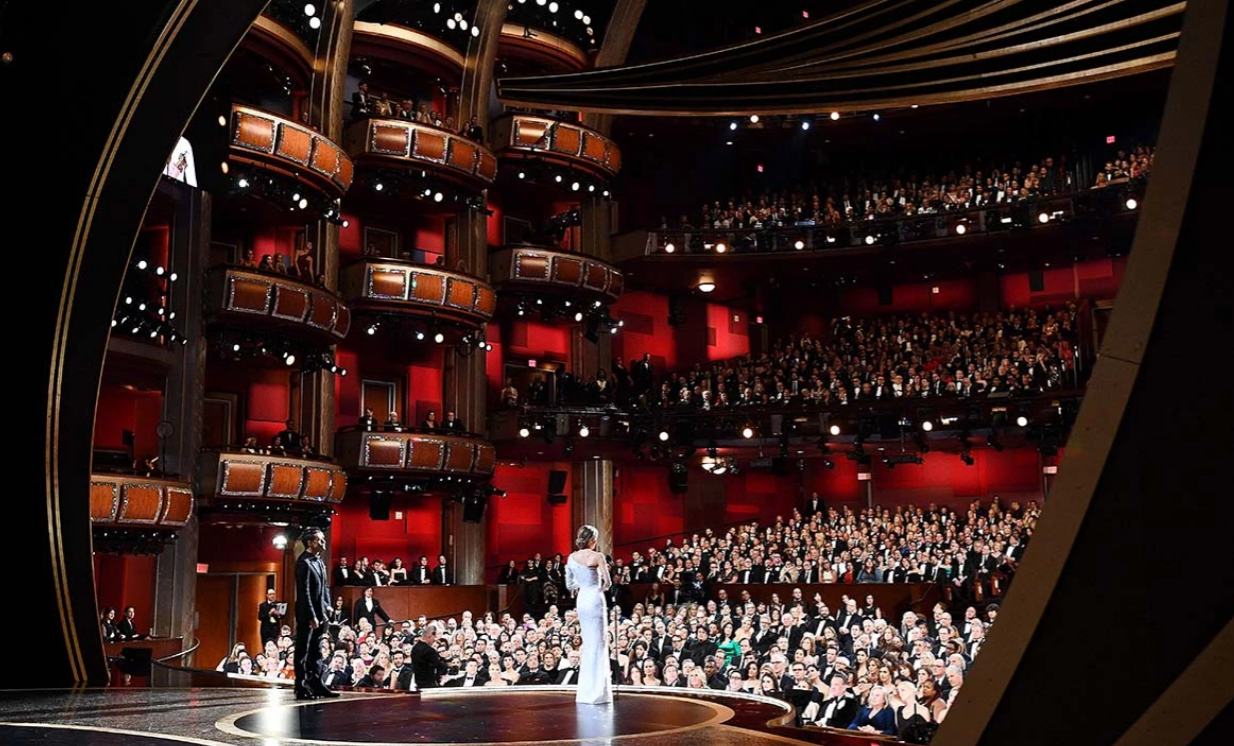
2013 Oscar Predictions

oscar_2011


I’ve watched every single Academy Awards presentation since 1972.  Haven’t missed a single year.

And without any doubt whatsoever, I can say this is the very worst year for movies in more than four decades.  Nonetheless, I’m still going to be watching and cheering come Sunday night.

Here are my picks and preferences for each of the major categories:

Read More

Posted by on Feb 5, 2013 in Blog, Essays, Movie Reviews | 3 comments

Roman Catholic Revulsion

Pope Benedict


I was raised in the Roman Catholic Church.

To this day, most my family are practicing Catholics.  I attended Catholic School (Holy Trinity in the Oak Lawn section of Dallas) — the same school run by the priest who gave President Kennedy last rights.  I attended mass regularly (strong emphasis on the past tense).  I was a member of the Knights of Columbus.  I once played on the church soccer team, which was called the “Crusaders” (seriously).  My Godfather graduated from the University of Notre Dame.  That’s as Catholic as it gets.

But over the years, I’ve gradually come to see the Catholic Church for what it truly is — an archaic, oppressive, lying institution that’s hopelessly out of touch with 21st Century realities, which destroys millions of lives around the world and has done unspeakable evil throughout human history.

The excesses stem not just a few bad apples.  The root cause is institutional corruption.  In Catholicism, according to Canon Law, everything flows downward from the very top.  This means the Vatican ultimately bears responsibility for crimes against humanity.

Strong words?  Hardly.  If anything, those words aren’t strong enough.

The Roman Catholic Church remains wielded to the Dark Ages.  And its not just because a bunch of men chose to walk around in black robes speaking a dead language that went out of existence 500 years ago while waving containers full of ash dust, or nuns suppressing their own individuality in observance of unconditional servitude.

Look at the facts:  Catholic policies towards women are degrading.  Catholic commandments on birth control creates imminent poverty for millions who starve and die in developing countries.  Catholic beliefs toward basic human rights are often are cowardly and self-serving.  Catholic teachings on sex are Neanderthal.  Catholic practices on economic and social issues are reprehensible.  And Catholic teachings on so-called “morality” are duplicitous.

All this aside, the Catholic Church’s policies and practices in the tens of thousands (perhaps hundreds of thousands) of sexual abuse scandals around the world involving priests is downright disgusting.  Many heads need to roll — starting with just about every Pope dating all the way back to the 4th Century.  Indeed, the Vatican has been a collaborator in innumerable crimes and cover ups since the fall of the Byzantines.

The Catholic Church is an empire of corruption.  This has nothing to do with matters of faith or a belief in God.  It has everything to do with making the appropriate choices as to which institutions in our society deserve our reverence and trust.

The Catholic Church and the Vatican deserve neither.

Read More

Posted by on Feb 3, 2013 in Blog, Movie Reviews | 0 comments

Movie Review: Quartet


Quartet


It took only 75 years for Dustin Hoffman to direct his first movie.

That he chose a film project way outside of Hollywood comprised of an entirely foreign cast (for an American actor and director) comes as a further surprise.

But the biggest shock of all is how his new movie, Quartet works so well.  Beautifully filmed, musically enhanced, and topped by stellar performances all around from actors perfectly cast in each of their roles, Hoffman’s long-awaited directorial debut reveals that he picked up some excellent pointers over his last five decades in the movie business from mentors like Mike Nichols, John Schlesinger, Alan J. Pakula, Sydney Pollack, and others who mastered the meticulous craft of cinema from the opposite side of the camera.

Quartet tells the story of a group of retired classically-trained musicians living together in a palatial retirement home in England.  All of the seniors were once world-class performers of classical music and opera.  Most still play.  So, adding it all together we have old people in a retirement home playing classical music.  If all this sounds terribly dull and depressing, well think again.

Quartet mainly works because it treats its subjects with great respect and yet also manages to confront issues that elderly people must face about their impending mortality — with absolute credibility.  These old people who move around slowly and dress funny aren’t to be pitied.  They’re retired, but they still enjoy a zest for living life — which for each of them means continuing to play and perform the music they love.

A number of stories swirl around simultaneously — comprised mostly of personality conflicts and even romance among the cast.  Indeed, this film offers a portrait of all our futures which is both realistic, as well as optimistic.  Like a similar movie made last year called The Best Exotic Marigold Hotel, every action and word of dialogue is entirely believable.

This movie’s real charms are its subtleties.  The way simple scenes flow together, the natural beauty of the estate, complimented by just the right classical vignette.  There are no car crashes, special effects, long senseless monologues, or shocking endings.  It’s a slice of real life, and the lives of these characters deserve proper reflection.

Perhaps the most satisfying moment of the film comes after the final scene, during the credits.  The added bonus material won’t be revealed here.  But be sure and don’t leave the movie theater early, or you’ll miss arguably the most poignant moment of the film.

Unfortunately, it’s my prediction that this movie won’t do particularly well at the box office.  Young people, who comprise the majority of modern-day movie goers, aren’t much interested in older actors with British accents or stories about what happens inside a retirement home.   And that’s a crying shame because it’s ultimately their loss.

But for more mature movie fans, and particularly those who incessantly complain that Hollywood doesn’t make films the way they used to, here’s a film tailor made for more senior sensibilities.  Those who stay home and ignore a film like this film do absolutely nothing to support their own cinematic wants and desires.  And no matter how you slice it — that’s the biggest shame of all.


MOVIE RATING:  SEVEN STARS OUT OF TEN  


Read More
Page 1 of 512345