Posted by Nolan Dalla on Oct 26, 2026 in Blog |

HOW (FINALLY) TO PISS-OFF A MAGAT
Question: Has there ever been a more dirt-dumb, selfish glob of gullible, immoral, brainwashed imbeciles than a MAGA Trump supporter?
Think about this…..
1. Another dumb ass Middle East war based on lies, with no plan, nor end ….. <silence>
2. National deficit explodes to $42 trillion (and rising) ….. <silence>
3. Health care coverage slashed for millions–including children ….. <silence>
4. Working people struggling while Trump crime family reaps billions ….. <silence>
5. Ballrooms, water fountains, giant arches, helicopter pads, gold leaf walls ….. <silence>
6. Trade and tourism with Canada collapses ….. <silence>
7. America’s allies insulted, threatened, treated like enemies ….. <silence>
8. Foreign thugs and nations committing war crimes praised, supported, embraced as allies ….. <silence>
9. Tariffs paid for by Americans, then government rebates returned to corporations ….. <silence>
10. Renaming the Gulf of Mexico, Lake Ontario, now proposing to change — “New Mexico” ….. <silence>
11. Constant threats, lies, embarrassments, and grade-school bullying ….. <silence>
12. Dehumanizing attacks on women, female journalists, even abuse victims ….. <silence>
13. Promising to release Trumpstein Files, then lying and covering them up ….. <silence>
14. A lifelong history of racism and ugliness, now official government policy ….. <silence>
15. Vicious insults directed at immigrants, including legal naturalized citizens ….. <silence>
16. Murdering Americans who protest in the streets, then lying about it ….. <silence>
17. Hiring the most callous, corrupt, and incompetent staff and cabinet in American history ….. <silence>
18. Oil companies $92 billion in profit (record high-last three months alone) while Americans are told to to suck up ….. <silence>
19. Openly stating he doesn’t care about high prices or people suffering ….. <silence>
20. Republicans controlling ALL branches of government, and every federal agency amidst the chaos ….. <silence>
But then…..
.
.
.
.
.
.
.
.
WHAT !!!!!!!!!!!!!!!!!!!!!!!!!
It costs $140 to fill up a pick-up truck !
W.T.F. ???
STOP !!!
SOMEBODY DO SOMETHING !!!
Read More
Posted by Nolan Dalla on Oct 25, 2026 in Blog |
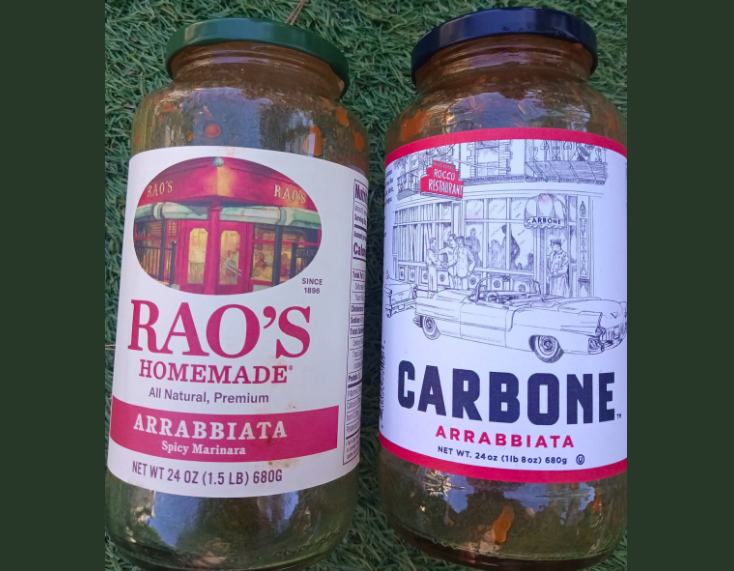
Something unusual happened yesterday. Marieta made spaghetti and she combined two different brands of tomato sauce. She changes recipes all the time — on some occasions cooking everything from scratch, and on other occasions using a store-bought brands.
For 20 years, Rao’s has been our “go to” sauce. Sometimes, we try other brands. But Rao’s always delivers quality and consistency.
Then, came yesterday’s surprise. We made a new discovery.
Marieta brought over two jars to me. She asked me to do a smell test. This was foodie’s perfume (see pict). I couldn’t believe the difference.
Rao’s is always good. But this unfamiliar brand we’d never tried before was — GREAT.
CARBONE is the brand (Noah, is this your family?). Cost $8 a jar (Rao’s is typically $9, but you can often find it on sale). So far, we’ve only tried the Arrabiatta.
As for taste, it was impossible to compare the two because Marieta had combined the sauces. Next time, we’ll use the Carbone brand exclusively and see if there’s a big difference.
Grocery shelves are crowded with many different brands of spaghetti sauces. The low-end sauces are almost inedible. Last time I tried Prego, my eyes stung. Ragu might be okay if you’re locked in a Guyanan prison and your name is Papillon and you can’t find any bugs. Good old-fashioned Hunts is simple, and fine in cases of an emergency. But those cheap brands loaded with preservatives, chemicals, and sugar belong in the garbage disposal.
Spaghetti sauces are like beer, cars, and cigarettes. Brand loyalty is a big thing.
I think I’ve found a new spaghetti sauce brand — CARBONE.
Anyone have another brand they think stands out?
Note: Join the discussion on Facebook here.
Read More
Posted by Nolan Dalla on Oct 24, 2026 in Blog |
NFL WEEK 7
ANALYSIS AND PICKS
I made 15 cash bets this week (so far). Please click the link here to read all the picks and plays of the week.
CLICK HERE
Here are a couple of appetizers for what I hope will be a Sunday feast:
GREEN BAY at DETROIT
Line: Lions -3
O/U: 53.5
I’m betting against Green Bay this week. Translation–I’m not betting so much on Detroit as against the Packers. The Lions’ offense needs no justification or write-up. We all know that this is one of the best in the league and now they’re back at home, where the Lions often put up big numbers. The Lions simply look like the better team, even with their defensive lapses.
Regular followers here know I’ve been “anti-Green Bay” most of the season. They’d been a horrid covering team up until a few weeks ago (two straight covers currently), failing ATS in 9 straight games before that–dating back to last season. We can credit the Packers for a couple of back-to-back home wins. But was beating CHI (which started a third-string QB) and the floundering badly-coached Cowboys (one of worst defenses in the NFL) really such a big deal? Going on the road at Detroit will be a far bigger test for Green Bay. In horse racing this is called a big step up in class.
This point deserves more emphasis: Green Bay faced these opposing QB’s, so far this season:
MIN (Murray making his first start with a new team, then replaced by the backup)
NYJ (Smith making his second start on a bad team)
ATL (Penix, Jr., coming off an injury)
TB (Daniels making his first-ever NFL start)
CHI (a third-string QB, with Williams and Kennum sidelined)
DAL (Prescott, suffering a miserable season)
Now, they’ll say hello to Jared Goff and the Lions, who also rush the ball very well. Stats: QB Goff has 12 TDs and 0 INTs this season. Repeating the horse racing thing — that’s quite an step up in class.
The Packers rushing game ranks as the league’s absolute worst, with just 60 YPG, for a horrible 2.8 YPC average. That’s a putrid figure. So, Green Bay must pass the ball and keep up with the Lions on the road. I’m glad to fade GB QB Jordan Love, who is an erratic performer and has yet to show he’s worth all the money they’re paying him.
I’m trusting Detroit’s offense to simply outscore the inferior team and cover here. I’d skip this if the line was -3.5. Laying only a FG seems quite reasonable.
Wager:
Full-Game Side: DETROIT -3 (-115) vs. Green Bay
–
NY GIANTS at HOUSTON
Line: Texans -10.5
O/U: 42.5
It’s rare to see a team with a better W-L record as a double-digit underdog. This line opened at HOU -9, but crossed a key number up to -10.5 based on the midweek announcement that QB J.J. McCarthy will start for the Giants. He’s basically the third-string QB and was acquired only a month ago from Minnesota. His couple of starts last season were torcherous, though last week he put up decent numbers due to playing in the 4th quarter versus a prevent defense that gave McCarthy plenty of trash-time stats. As much as I wanted to grab the Giants and take the juicy points here, I can’t. Houston may also have shed its monkey on its back after a horrible 0-4 start, having won two in a row. The Texans looked terrific on offense last week beating Jacksonville.
The standout play prop value could be HOU WR Nico Collins. He’s scored a TD in 3 of his 4 games this season (two games were missed with injury). He’s likely to be targeted generously this week, given he’s the Texans’ “go-to” receiver. NYG CB Newsome has been ruled out for this game, which means the Texans’ best deep threats will be up against a backup corner. I expect this game could also turn into a confidence builder for Houston given they’re winless at home this season and here’s a great chance to run up the score and please the home crowd. Yes, those things come into play in prop betting.
I rarely make “player scoring a touchdown” prop bets. Here’s an exception. Houston’s Collins has a good chance to get into the end zone at least once. His prop price to score a TD is +130. Houston’s passing attack looks back on track after seeing they put points on a good defense last week, and is certainly now much better with Collins in the lineup. Now, he’s up versus a wounded defense and looks to be a star player to bet on to score a TD.
Wager:
Player Prop: HOU WR Collins to score a touchdown–YES (+130)
–
FINAL LIST OF WEEK 7 WAGERS:
[For those who just want the picks]
Full-Game Team Total: CHICAGO OVER 26.5 points (-115)…W
Second-Half Team Total: CHICAGO OVER 13.5 points (-105)…L
Player Prop: NOR QB Shough OVER 227.5 passing yards (-115)
Full-Game Line: NEW ORLEANS +3.5 (-110) vs. Pittsburgh
First-Half Line: NEW ORLEANS +2.5 (even)
Player Prop: TB RB Irving OVER 35 rushing yards in 1H (-115)
Player Prop: TB RB Irving OVER 15.5 rushing attempts in full game (-105)
Player Prop: TEN QB Ward UNDER 187.5 passing yards (-115)
Player Prop: CIN RB Brown UNDER 51.5 rushing yards (-115)
Player Prop: MIA RB Gordon OVER 52.5 rushing yards (-115)
Player Prop: IND QB Jones to throw an interception–YES (-125)
Player Prop: HOU WR Collins to score a touchdown–YES (+130)
First-Half Line: ARIZONA +3 (-120)
Full-Game Side: DETROIT -3 (-115) vs. Green Bay
Player Prop: SEA QB Darnold to throw an interception–YES (-115)
—– Visit HERE for more write-ups and picks (always free):
Read More
Posted by Nolan Dalla on Oct 23, 2026 in Blog |
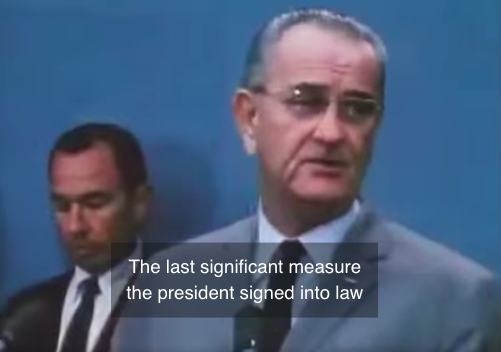
On this date 58 years ago, President Lyndon Johnson’s GUN CONTROL ACT OF 1968 was signed and became the law of the land. It’s worth remembering on this anniversary — especially since an epidemic of domestic violence and misuse of firearms and mass shootings have become so frequent as federal laws have since lapsed and attempts to control the proliferation of deadly firearms have become a thing of the past.
Sadly, gun laws have not progressed. They have regressed.
As many know, I greatly admire LBJ and view his presidency and domestic agenda as one of the three most progressive periods in American history. Among all the progressive initiatives by LBJ (Civil Rights, Medicare, War on Poverty, etc.), his advocacy of gun control is sadly forgotten. It deserves remembrance. And a reawakening.
Incredibly, it took nearly FIVE YEARS to pass this important bill. After it was learned that assassin Lee Harvey Oswald has bought a scoped rifle for $19.95 in a mail-order from a sporting goods store to murder JFK, the Johnson Administration sought new laws to stop dangerous people from getting firearms. Conservatives in both parties opposed the early attempts to pass gun laws. No surprise — no matter when or what party, conservatives always seem to be on the WRONG side of history. And we all suffer and pay the price. Two men of great vision paid the ultimate price.
When the assassinations of MLK and RFK happened in 1968, those shocking tragedies put gun control back on the domestic agenda. But oddly enough, it was something else that became the tipping point. More than anything else, *racially-motivated fears* gave us this new law and sparked these landmark national gun restrictions. White fears about the ongoing “race riots” in many U.S. cities and panic that disorder would become even more violent if minorities had easy access to guns triggered action. So, the conservative elders in both parties began acknowledging something had to be done. Yeah, that’s what it took to finally change minds — not a dead president murdered on a Dallas street, nor a political candidate gunned down inside an LA kitchen, nor a peaceful preacher covered in blood on a Memphis motel balcony. It was the Blacks rioting in Watts and Newark and Detroit. Time to do something!
Even with overwhelming public support, incredibly, there were still holdouts — far Right wingers in the South (Wallace Democrats) and the holdover Goldwater Republicans remained opposed. Nonetheless, the Gun Control Act passed the House 305-118. It passed the Senate 70-17. It became law when LBJ signed it on Oct. 22, 1968. Back then, even the NRA supported the law and put out a public statement. I know — shocker.
It’s astonishing that nearly six decades have passed since this date, and we’ve regressed into a sad and broken nation that tolerates — and even accepts — gun violence as something that’s normal. School shootings aren’t shocking anymore. They’re expected. A hardline conservative activist even argued that some measure of gun deaths were an acceptable price to pay, before being murdered in public in broad daylight by a disturbed individual armed with a rifle.
At least we tried to take one step forward on this date, before taking two steps backward.
Read More
Posted by Nolan Dalla on Oct 22, 2026 in Blog |
I have a number of comments (and questions) about the 2026 midterm election which is happening right now and will conclude in a few weeks.
Hooray! It’s nearly over!
Some thoughts. And several questions. Here it goes….
–POLITICAL JUNK MAIL–
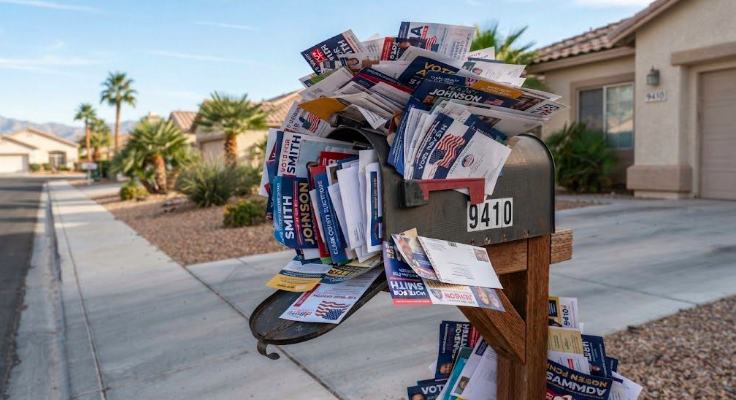
I wish to report a crime. Mailbox abuse. It’s an epidemic. I don’t understand the flood of candidate junk mail. Are these mailers effective? Who reads them? Anybody? The only thing I see these rectangular cardboard cutouts being useful for is as a dustpan. Who votes based on what they read on a political flyer? How many of you are sick of getting dozens, if not hundreds of junk mailers?
True Story: A few nights ago, our postman came at 7:15 pm. I went outside asked him why he was so late, since it’s never been delivered during night time. He said all the political mailers clog up the postal system and create delays in delivery. Who knew?
–CITIZENS UNITED / CAMPAIGN FINANCE–
Corporations and rich people buy our politicians and sway our elections. That’s a fact. While a dirty strain of grift and corruption has always infested politics, it’s never been so pervasive, expensive, destructive, and anti-democratic — as now. Public service shouldn’t require a candidate to raise millions of dollars. Big money has ruined representative democracy. Granting the most powerful forces in society all control over laws, rules, regulations, and how we live is catastrophic for a democratic society. Unless the sick distortion of a broken system we use to elect our leaders changes, then nothing else will change. Likely, it will only get worse.
–POLITICAL TV COMMERCIALS–
Want to know one of the biggest reasons why nothing ever changes? Easy answer. Somebody’s getting rich! Let’s look at *who* exactly profits from perpetual conflict….who makes the most money off of hate and fear and division…who saps the endless bombardment of ad wars? Answer– bingo! Corporate media giants earn BILLIONS in profits all across the country running a constant cycle campaign ads 24/7, mostly TV commercials. National networks. Social media. Local TV stations owned by mass corporate conglomerates. Giant media companies (and their leech shareholders) rake massive profit off both sides. Secretive PACs with hidden agendas funnel much of the money raised by campaigns into corporate coffers, which spews a seemingly endless pipeline of distortions. It’s a grotesque merry-go-round. Corporate media is making a killing, off of killing democracy.
–NEGATIVE ADVERTISING–
Most voters will insist they don’t like “attack ads.” They often complain about negativity all the time. Then, what do voters do — they pick candidates as a counter-reaction to the negatives of the opposite candidate. Fact is — negative attack ads work. That’s why we see so many of them. Nothing motivates a low-information voter more than anger. Love conquers hate? Wrong! Not in politics and campaign ads.
–PHONE CANVASSING / ROBO CALLS–
Question Does anyone get calls from pollsters? For years, I never received a call from any major polling organization. Now, I can’t shut them off. Of course, most “polls* we come into direct contact with are not legitimate. Most are actually dubious in nature. They “push poll” questions aimed at undecideds, or confused voters susceptible to suggestions and cherry-picked issues. These tactics are political snake oil. I should note that back in 2016, I got “push polled” by the Hillary Clinton campaign, wrote about it, then my social media accounts and website blew up and went viral with more than a half-million views, threats, etc. From that point forward, I went to war with “push pollsters.” Then, I got so overwhelmed that I gave up and stopped answering the phone. It was like trying to drain the ocean.
Another True Story: Our Century Link home landline stopped working a few weeks ago. How did I know? For an entire day, the phone never rang. Not once. We were receiving at least 5-10 calls per day, many recorded messages. Also, I got on the pollster’s *sucker* list, and get at least a few calls daily from “research” companies. Then, dead silence. It was wonderful! As I was thinking about summoning the repairman and getting my landline fixed, instead I decided to wait. This was a gift! No more political robocalls! I’ll call the repairman after the election.
I’ll have more stuff to share, but that’s it for today.
Feel free to post your comments. Even better, if you know answers to any of my questions, then please respond. Maybe we’ll all learn something.
Read More
Posted by Nolan Dalla on Oct 22, 2026 in Blog |

WHY DO CAPITALISTS ALWAYS NEED A *SOCIALIST* BAILOUT ???
Time for another government bailout! Over and over and over again. All thanks to the working class. So much for “free market” capitalism.
Universal health care for Americans…SOCIALISM BAD !!!
Free money for banks, Wall Street, giant corporations, big agriculture…SOCIALISM GOOD !!!
You seeing the picture now?
Why is it the repeated failures of reckless capitalism and insatiable CEO and shareholder greed often end up being bailed out and corrected with SOCIALISM? Repeatedly, throughout history. From the New Deal bailing out the Republican’s Great Depression of 1929, across a century of multiple bailouts, to the modern-day imbecility of Trump tariffs, ruinous self-defeating energy costs, mind-boggling insider corruption, and yet another stupid Middle East war with no end in sight.
In the last Republican regime, BANKS and BIG FINANCE almost plunged the entire world into another Great Depression, that is, until they were BAILED OUT BY THE GOVERNMENT.
A few years later, the U.S. AUTO INDUSTRY was nearing total collapse, until they were BAILED OUT BY THE GOVERNMENT.
I could list dozens more SOCIALIST bailouts, and that doesn’t even begin to touch all the capitalists bitching about “big government,” while getting rich on government contracts.
Now, the CORPORATE FARMS and BIG AG are struggling and stuck in a crisis, and the decrier of all things “socialism” Trump says they’re going to be BAILED OUT BY THE GOVERNMENT. This is the second time in two years Trump has promised a bailout to “farmers.” He also agreed to bailout the wacko capitalist in Argentina, with American taxpayer money.
Working people — pick yourself up by your bootstraps! You’re on your own!
Corporations, banks, rich people — here’s free money! More tax breaks!
Privatized profits……meet socialized losses. When capitalists make money, they hate big government. When capitalists lose money, they run to the government for help.
They never learn. They are despicable liars. I’m sure these Red State Republicans will lapse back into their usual loathsome hypocrisy once they start making money. Until then, it’s GOVERNMENT TO THE RESCUE!
They all hate socialism…..until they need SOCIALISM to save them.
Read More
Posted by Nolan Dalla on Oct 21, 2026 in Blog |
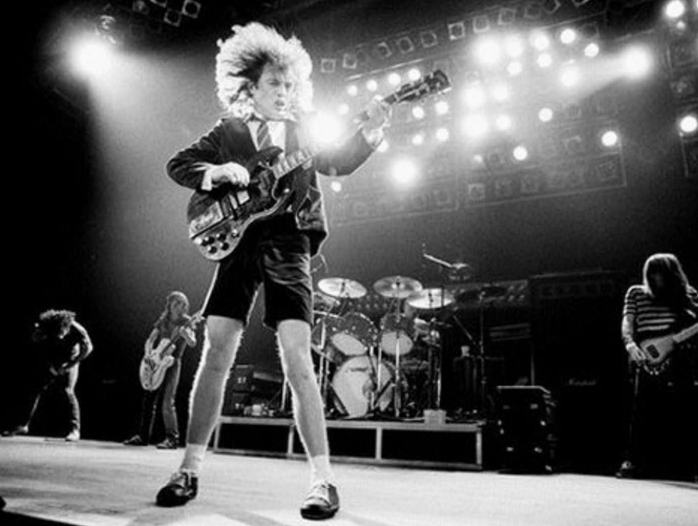
Here’s my seventh music retrospective on the best albums released–by year. My previous “Best Albums” lists covered 1976, 1977, 1975, 1978, 1974, 1979 (in that order). See more on my website (www.nolandalla.com) or go back on Facebook to see those lists.
Summation:
1980 was an astounding year across the musical spectrum. That remarkable year marked a peak crescendo of clashing styles, wild fashions, changing musical tastes, and even outright hostility between genres and their most faithful listeners. Some might even say it was a music war. Recall, Disco Demolition Night had exploded in Chicago during the previous summer, and 1980 became the year of a mass national fallout — as radio stations across the country abandoned disco formats, and record companies unfairly tagged disco as toxic. In the U.K., musical tastes evolved even faster, and became more outlandish, even shocking.
Storm clouds were on the horizon. Remember, the best-selling artist of the year, Christopher Cross (more on him later). Pop music was about to be rocked by a seismic shift into New Wave and other variations, as well as the birth of MTV the following year (1981). Music television and videos would quickly steamroll over the global creative and business landscape and would change everything. So, doing this retrospective on how many great rock albums were released that year was, for me, a surprise. I was a senior in high school at this time and remember wearing out the iconic albums on this list. I also despised disco back then (how wrong I was!). Some may call this the last really great year for traditional rock, which was the era of the backlash against all things 1970s.
You decide. Here we go….
—– Albums that Didn’t Make the Cut —–
“Hi Infidelity” …. REO Speedwagon
– This album sold a staggering 10 million copies, rocketed to #1 and stayed there for weeks, spawning six hit singles that charted. But I can’t stand REO Speedwagon–then or now. Mediocre schlock. Fans will insist it belongs in the top-10. It all depends on your tastes.
“Songs” ….. Vladimir Vysotsky
– Few Westerners know the name — Vladimir Vysotsky. Think Bob Dylan or John Lennon making music during the darkest days of the former Soviet Union. Yeah, hard to imagine but easy if you try (see what I did there?). Somehow, Vysotsky was so creative and energetic, he penned 600+ songs and was able to circumvent strict government censorship and even was published by the state-owned record company. This singer-songwriter, poet, and actor had an profound influence on Soviet culture. He was beloved for his unique singing style and clever lyrics, which often commented on personal struggles, social themes, and politics, incredibly, without getting banned or arrested. A deeply troubled man with chronic health problems, years of harassment by the Soviet government led to a premature death in 1980 at age 42. His death still remains a matter of speculation and controversy. His final album, “Songs” sold 2.5 million copies–an astonishing feat given the obstacles he faced, and no marketing whatsoever. He deserves mention, and remembrance.
“The Blues Brothers” ….. The Blues Brothers (Dan Akroyd, John Belushi, and guest all-stars)
– The famed SNL cast members and musical duo created alter egos as Chicago bluesmen, and somehow they pulled it off. Memorable movie comedy that year spawned a surprisingly catchy album with several R&B and soul icons including Ray Charles, Aretha Franklin, John Lee Hooker, Cab Calloway, and others. The Blues Brothers recorded their first album, “Briefcase Full of Blues,” two years earlier, which to the surprise of many, hit #1. This release is even better.
“Emotional Rescue” ….. Rolling Stones
– It pains me to leave this great album off the list, because these studio sessions were so abundantly fruitful, they not only spawned a new-waveish sound for the Stones and reached #1 in several countries, but many of the recordings carried over into their next album released the following year, “Tattoo You” (which I consider one of RS’s best five albums). Interestingly, while disco was on its way out, the title track as well as “She’s So Cold” and “Dance (Little Sister)” were very discoesque, reinforcing the prevalent racial bias in pop music (the Stones took/stole Black music and made it their own).
“Boy” …. U2
– Very different unpolished sound and raw take-no-prisoners energy infuses U2’s debut album, now regarded as groundbreaking. What worked in the studio here sparked the rock solid foundation for what was about to become the biggest band in the world over the next two decades. I’m not a fan of this album, but it merits inclusion here as an honorable mention.
—– More Worth Remembering (Good and Bad) —–
“Love Stinks” …. J. Geils Band (this album marked the group’s commercial peak, and we’re still listening to these songs decades later, in movies, commercials, etc.)
“Panorama” ….. The Cars (not quite up to the level of the group’s marvelous first two albums, which were perhaps impossible to equal, but still delivers that “Cars” grove sound)
“Voices” …. Hall and Oates (two Philly street guys with angelic voices release a retro-sounding album sparking 4 hit songs–excellent blend of R&B magic, yet looking very modern into a new decade. Nobody else was doing this at the time, and this would spurn a wave of copycats.)
“Argybargy” …. Squeeze (now regarded as a New Wave classic, has grown in stature over the years–to be perfectly candid, I haven’t listened to this in many years and will go back and re-visit sometime.)
“Glass Houses” …. Billy Joel (I love most of Billy Joel’s timeless melodies, but really dislike this album. It was a smash success, of course, and triggered his first #1 hit, “It’s Still Rock n’ Roll to Me,” even though that wasn’t rock n’ roll, at all. Man, I dislike that song. Who among us didn’t order this album from the Columbia *10 albums for 10 cents* special offer?)
“Saved” …. Bob Dylan (the second of the icon’s “Christian trilogy.” It’s horrible. Aside from Dylan suddenly preaching religion to us after rejecting the counterculture that made him a transcendent pop figure, the music simply isn’t interesting, nor inspiring. Most of us could appreciate a gospel sound juxtaposed with Dylan’s quirky voice and musicality, but he almost goes out of his way to make this NOT sound like a gospel album. The result is an embarrassing and confusing mess of a man lost. It’s on many WORST albums of all time lists.)
_________
Now the top 20:
(20) “Remain in Light” …. Talking Heads
– This groundbreaking album so way-ahead-of-its time must be in here somewhere. I can see it as an honorable mention, or maybe as high as #7 or #8. Let’s compromise and stick it at the edge of the top-20, which many will argue is too low. So many influences and unique sounds are colliding on this disc, the most memorable release being the wickedly funny and catchy cultural parody, “Once in a Lifetime.”
(19) “Arc of a Diver” …. Steve Winwood
– This album stands as a virtuoso and a one-man showcase. It’s a master work of creativity. Known for his earlier hits and universally-respected for his prodigal output with bands — Traffic, Blind Faith, and the Spencer David Group (which he joined at age 14!) — many years later Winwood wrote, produced, mixed, and played every instrument on this album which he recorded at his home studio. Such self-indulgence has derailed other overconfident songwriters, but Winwood completed and released this impressive collection of synthesizer-jazz-rock tracks which alternate between power walls of sound and softer tender melodies.
(18) “Crimes of Passion” ….. Pat Benatar
– This was Pat Benatar’s hard-driving second rock album, showing that a pretty face with a raspy voice could be sexy and yet still write catchy lyrics and belt out lead vocals with the very best male rocker counterparts. She would parlay the success of this album and dominated rock stage arenas. The success of this sophomore LP paved the path of opportunity for multiple female recording artists who followed. First, it was “let’s find the next Linda Ronstandt.” Then, it became let’s find the next Pat Benatar.” Her chart-topper, “Hit Me With Your Best Shot” became Benatar’s theme song, along with “Treat Me Right.” She won a Grammy for this album, and collected a golden stature for three consecutive years, a rarity in pop music.
(17) “Double Fantasy” …. John Lennon / Yoko Ono
– Released just weeks before his murder, “Double Fantasy” was John Lennon’s doo-wop infused comeback album following a deliberate five-year musical and media hiatus after a frantic decade of living under the world’s brightest spotlight. Ultimately, it become his final farewell. Each of the Lennon tracks is radio-friendly, and deeply introspective, and this collectively ranks as his best solo work since his debut, “Imagine.” Unfortunately, Lennon’s songs alternate across both sides of the disjoined album with wife-collaborator Yoko Ono, whose equal number of contributions were annoyingly layered in between. While Ono’s “avant garde” (experimental?) vocals aren’t nearly as torturous as might be expected across this vinyl, Lennon’s decision to saddle down much of the album with her work significantly detracts from its ranking. Lennon had more than enough material to release what should have been arguably one of the best albums of the year (several session outtakes were released later). Had he done so, this album would easily rank in the top-10.
(16) “Blizzard of Ozz” …. Ozzy Osbourne
– This was Ozzy’s first solo album after splitting from Black Sabbath. It’s universally recognized as a landmark release, ranking on many lists as one of the best metal classics and guitar-heavy masterpieces (thanks to Randy Rhodes, who died a few years later) in history. While Sabbath was big, this album made Ozzy an international star, which would shine on for the next 40 years. The album also became memorable for sparking a heated legal battle, as the Ozzy and CBS Records were sued because one teenage fan committed suicide (re; “Suicide Solution”). Ozzy appeared in court, testified, and won an important case in defense of artistic expression (the corporation wanted to settle out of court, but Ozzy refused). This isn’t among my favorite hard rock albums, but it’s impact and importance cannot be overstated.
(15) “I Am What I Am” …. George Jones
– Hard-drinkin’ firebrand country honky-tonk legend George Jones might appear out of place on this list. I insist he and this album belongs. It’s the best country album of the year, containing one of the most beloved classics in history, “He Stopped Loving Her Today.” Deeply troubled throughout his turbulent life, when he did show up, “No Show” Jones didn’t sing just his songs—-he lived them. Ten self-reflective and tender songs appear on this masterful collection. Unfortunately, the cover is plasted with an absurd photo of Jones decked out in a white disco suit (this was supposed to make him look more modern). They packaged “the Possum” as something he wasn’t, but then once he began strumming and singing simple lyrics about love and loss, millions could feel the pain.
(14) “Against the Wind” …. Bob Seger (and the Silver Bullet Band)
– This was Seger’s only number-one album over his long career. It spent six weeks atop the charts. Many critics graded this as Seger’s best album, which reveals a more mature sound and greater depth than his earlier releases, which were also very successful over the 1970s. Some critics accused Seger of too much repetition. Backed by the Muscle Shoals Rhythm Section, much of the album is inspirational and aspirational. Seger described his ambition on these recordings as trying to make a soundtrack for normal people and their lives. He succeeded, and the 3.7 million sales plus a Grammy for best rock performance is solid evidence.
(13) “Gaucho” …. Steely Dan
– Steely Dan has never been affixed to my musical wheelhouse. Nonetheless, their cutting edge sound, innovations, fusions of jazz and rock, and layered sophistication makes them widely admired. In the aftermath of the huge success of Aja (1977), this stands as one of the group’s most ambitious projects. However, production was fraught with troubles. Recording lasted more than a year, and included nearly 50 studio musicians, many of whom were hired then quickly discarded. Production costs sailed way over budget. The record company was furious with several missed deadlines. Creative differences within the group also splintered output and led to multiple musical dead ends. Yet despite all of this, the album worked. It was released, instantly became a hit, and sparked three hit singles, including “Hey Nineteen,” “Babylon Sisters,” and “Time Out of Mind.” The outtakes and bootlegs from these sessions attracted a near cult following, with many online discussions about those sessions taking place to this day.
(12) “The Jazz Singer” …. Neil Diamond
– When it comes to pop icons of the 70’s Neil Diamond is certainly one of a crowded list of nominees. “The Jazz Singer,” a soundtrack album to the movie, became a huge smash hit in spite of box office disappointment. Three songs broke into the top-10, including “Hello Again,” “Love on the Rocks,” and the retro-patriotic flag waver, “America.” Overall, this is an excellent musical encapsulation of the movie’s storyline which showcases a clash between old and new, native and foreign, religious and secular, father and son. Mirred by problems, changing directors, cast members who were replaced, the film (an awkward remake of the 1927 classic) was ripped apart by critics. But the album became one of Diamond’s most successful, and remains praiseworthy apart from the movie’s fate.
(11) “Trilogy: Past Present Future …. Frank Sinatra
– Most of the timeless Frank Sinatra canon was released long before long-play albums were popular, so it’s difficult to pick a particular collection, though anything from the Capital years (1954-59) merits consideration. This triple-album release stands as the most ambitious of a half century of recordings — a strange, brilliant, and bloated album packed with a whopping 26 new arrangements, though much of the familiar songbook standards had been previously recorded, including several covers. The result is an aged whiskey cask tucked away and forgotten in the cellar that you pull out only for special occasions, rather than the fresh bottle. And that’s just what we expect and revere from this artist, who delivers many surprises. What makes this a standout is the later 3 sides of the expansive collection, including several recordings don’t associate with Sinatra. Yes, this also includes some head-scratching camp-level parody-like misses. Yet, this unpredictability, a rare risk for Sinatra, combined with the pure volume of new material, makes this album one of the year’s most fascinating.
(10) “Freedom of Choice …. Devo
New wave synthesizer-heavy pop music wasn’t mainstream until Devo broke down barriers and instigated several imposters, few able to match the group’s kitschy modern science stage act, joyful facial gyrations, and surrealist humor with undertones of court jester truth. Art punk, synthetic, electronic — forget the labels. Just say Devo. Everybody knows the monster hit song from this album, “Whip It.” As with much great art and social commentary, debate lingers about the real meaning of the intentionally-ambiguous title. When a low-budget video was made of the group brandishing whips on a cartoonish ranch, audiences assumed the music and lyrics were sexual metaphors. Perhaps that’s the intrigue of a song that seemed the unlikeliest of mainstream hits. Much of this album consisting of 12 songs is quite similar to that non-sensical expressionism of the popular hit off the album, but don’t underestimate the other tracks, either. Devo’s strange look and original sound may not be for everyone, but everyone was surely talking about them back then.
(9) “Never for Ever” …. Kate Bush
– There’s so much to love and enjoy about Kate Bush and her music. She’s the British singer-songwriter who defies recording labels and shatters pigeonholing. “Never for Ever” was her third album, which became so hot inside the club scene UK as a cult classic that she catapulted to #1 on the national album charts, thus becoming the first female artist in history to reach that plateau as a solo release. Soon thereafter, Bush also topped charts throughout Europe. However, her label feared that popularity wouldn’t repeat in the U.S., so the American release of this album wasn’t until 1984. There are so many lyrical influences here, inspired by literature, movies, history — and the progressive art pop rhythms are rife with multi-layered instrumentation. This is a hidden gem for many who may not have heard it — ahead of its time and still sounds fresh to this day. Theatrics, dance, synthesizers, folk instruments — this is and album full of awe and wonder.
(8) “British Steel” …. Judas Priest
– This is revered and respected as one of the greatest metal albums of all-time. That said, what makes it a top-10 selection is the strength of every song on the album. It’s rare that any rock group would have playable material on both sides in every recording. This rarity is even more pronounced when we consider metal bands don’t typically produce mainstream hits.
(7) “Celebrate” …. Kool and the Gang
– I suspect the title song popped instantly into your head. Me, too. The title track stands as one of the most well-known party songs of all-time, played everywhere from birthday parties to sports world championships. But there’s far more to the story of this surprise hit of an R&B album by funk pioneers, Kool and the Gang. They were initially blasted by many funk purists for “selling out,” opting for a groovy dance-drive sound that was certain to stray loyalist fans away from their roots in boogie and swing music. Others cite KATG’s changes as adaptability as an unforeseen monster comeback album, following three straight flops and the near end of their recording contract. This album’s massive crossover success solidified KATG’s place among the nightclub and dance genre circuit, and guaranteed we’d be singing the chorus line half a century later.
(6) “Diana” …. Diana Ross
– For all her classic hit songs in the sixties with the Supremes and her widely-publicized solo diva-ness, this album may have been her most spectacular musical achievement. Initially, “Diana” included a much heavier disco vibe throughout. Once the disco backlash was underway, warned that releasing it *as is* might “ruin her career,” Ross and co-writers panicked and then re-mixed every song. Even the album’s B/W cover shot, showing a self-confident but plain-faced Ross wearing a pedestrian t-shirt clashed with her queenly image. She had recorded a throw-a-way song Motown executives hated, and she was about to discard it. Then, Gene Simmons (of Kiss, who she was dating at the time) heard it and persuaded Ross to stick with the song. That recording was “Upside Down,” which rocketed to #1. The album sparked four major hits, including “I’m Coming Out,” which as the title suggests became a mega-anthem for the gay movement. This brave album ultimately revealed a very different side of Ross, an artist who had matured, began following her own instincts, and accordingly became a cross-cultural and multi-generational hero.
(5) “Christopher Cross” (self-titled) …. Christopher Cross
– This was one of the most dominant soft rock albums in history. It won five Grammy Awards — including Album of the Year, Record of the Year, Song of the Year, and Best New Artist, with Cross becoming the first artist to win all the four major categories in the same year. Cross is a fascinating case study and yet also the epitome of victimization in the eternal commercial conflict between style and substance. Note: In the previous Part 1, I included a video link to Cross’s career story and some might say–his tragedy. But aside from all the drama and egregious injustice, the fact remains that this debut album is remarkably solid. Numerous hits are enhanced by Cross’s guitar work, which remains vastly under-appreciated (see his videos when he talks about the different sounds of guitars — fascinating!).
(4) “III (Melt)” …. Peter Gabriel
– Who else remembers this oddly-titled, politically-driven protest album from one of the 80s most innovative artists? Sometimes called “Peter Gabriel 3,” many musicologists rank this among the most influential LPs of the era, noted for the hypnotic drumbeat and reverberation that came to characterize the unique “Gabriel sound.” The anti-war song “Games Without Frontiers” was a rare music-with-a-message hit, reminding us that rock could still be the spear of awareness and activism. Another song, “Biko,” about a murdered South African freedom fighter, sparked scandal. Studio execs, including Atlantic’s legendary Ahmet Ertegun hated it (“why would any American care about some guy in South Africa?”). Atlantic rejected the album and cancelled its pending release in the U.S.. It later found a new label (ultimately on Geffen, a new company). “III (Melt): did become both a critical and commercial success, praised by critics as pushing boundaries when most artists and recording companies played it safe. Even the bizarre cover, showing a half-distorted facial image of Gabriel, challenged norms. No one back then expected Gabriel, given his firm refusal to conform, would become one of MTV’s most popular artists just a few years later.
(3) “London Calling” …. The Clash
– With increasing frequency as this series continues, you’ll witness my ignorance and/or failure to appreciate some of these albums and their impact. Here’s one of the most highly-acclaimed classics ever, which frankly, I’ve never regarded as anything more than a curiosity. That’s not meant as criticism. It’s just hard for me to give it a grade. What’s not debatable is the near-consensus opinion — then and now — that this album ranks as an epic double album (released in 1979 in the U.K, and in 1980 in the U.S.). It’s remarkable that a punk and new wave-driven album containing 18 songs was such a massive hit (5 million copies sold), especially given it’s edgy rebellious genre. Some critics give this album a perfect score. It was selected as best album of the year, and even made multiple top-100 lists as one the greatest albums of all-time. I can’t argue with that overwhelming weight of convincing evidence, so I’ll defer to those experts. However, I do believe two albums should rank above it.
(2) “The River” …. Bruce Springsteen
I wasn’t a Springsteen fan until I heard “The River.” But I still feel inadequately unqualified to offer a fair assessment. Easy fanboy review: I just love the raw energy and rank this as a treasure trove of outstanding music. “The River” is a double-album, but still feels like lots of great outtakes were left inside the studio vault (I’ve since learned this album was recorded over an 18-month period and begat 50 songs). By this period, Springsteen as a recording artist and performer had developed an obsessive perfectionism about his music. He rehearsed songs until many bandmates were exhausted and technicians were ready to walk out. His objective was to become so proficient with every note and band member that the tireless work ethic and forced repetition carried over onstage into live performances. This dedication certainly contributed to Springsteen’s revered reputation as a stage performer, who frequently did 3+ hour shows (140 tour dates followed this album’s release, a physically and mentally draining schedule). That’s the same high energy that infests this album throughout. Twenty songs ultimately made the final cut, which became labeled as “heartland rock,” a new blending of sounds intertwined with traditional, country, bluegrass, and folk fused with familiar lyrics about love, life, home, family, and community. I can’t judge this among Springsteen’s other work (please feel free to offer an assessment). What matters is the inspiration this album provided to other artists. The album sold well in the U.S., but less so in the U.K. and elsewhere–perhaps due to the American heartland-heavy themes.
(1) “Back in Black” …. AC/DC
– The rarest album bears many gifts. It’s a snapshot of sound. An unstoppable force of energy. An evergreen stamp of distinction. And the very rarest leave a transformative legacy. None of this seemed remotely possible for the Australian hard-rock band AC/DC in February 1980 when it all seemed to be tragically over. Following the shocking death of lead-singer and frontman Bon Scott, the band seriously considered calling it quits. But instead, brothers Angus and Malcolm Young chose to continue. They burned through several aspiring replacements in try-outs and then auditioned a newcomer named Brian Johnson [Listen to his interview with Howard Stern sometime as to how he got this new gig that lasts to this day–it’s riveting]. Johnson had the impossible task of stepping behind the microphone and replacing the irreplaceable, ultimately shrieking out lyrics breathlessly that became anthems worldwide. Johnson couldn’t possibly become Scott, so he made his triumphant debut as–Brian Johnson. Only four months later as the follow up to the massively-successful “Highway to Hell,” on July 25, 1980, AC/DC released “Back in Black” — an unlikely album born from a devastating loss that became one of rock’s greatest declarations of survival. It spurred multiple iconic hard-rock masterpieces (Hell’s Bells, You Shook Me All Night Long, and the title track) and would sell 50 million albums, to date, which stands as the second best-selling album of all time.
This completes my “best” list for 1980. In my next write-up, I’ll review the year 1972.
Comments welcome!
Read More
Posted by Nolan Dalla on Oct 19, 2026 in Blog |
Voting began in several states today. Here are some early thoughts about the mid-term election and many of the most closely-watched races in the U.S. Senate:
– Democrats will win control of the House of Representatives. If they don’t, then something sinister absolutely happened — which I don’t rule out as a dangerous possibility. Even top Republican officials acknowledge the question isn’t *if* Democrats will pick up seats. Rather, it’s how many. A “Blue Wave” would be encouraging, though I’m skeptical that curtails the dysfunctional madness we’re witnessing daily in the White House.
– I won’t make any public predictions about control of the Senate, though I suspect Democrats may come up just short of control…perhaps 49 seats or maybe 50 (which means the VP casts all tie-breakers, if Senators vote strictly along party lines–and we also see some breaking ranks such as Sen. Fetterman, which already creates a problem in the next session). Democrats will do historically well in many races, and even cut it close in Red States. However, the gambler in me knows that it’s very difficult to “run the table” in the close battles, and that’s what Democrats must do to win.
– Many Republican candidates are atrocious. Scandal-plagued, personality-starved Ken Paxton (TX) might be as awful a Senate nominee as there’s been in the modern era–and that’s what many *Republicans* are saying about him. Observing the warbling waffle-iron Susan Collins (ME) is cringeworthy. Roger Marshall (KS), the dirty sue-happy doctor represents everything gone horribly wrong with our for-profit health care system. True to his last name, Sen. Pete Ricketts (NE) represents a prolonged deficiency of leadership. Lady Lindsey’s sister-brood Darline Graham (SC) can’t find Russia if you gave her a map of Russia. And the drawling old ball coach Tommy Tuberville (AL) guarantees that even if Paxton wins, his rung at the bottom of the intelligence ranking is set for life. What’s most frightening? All of them might win!
– The objective aspiring political analyst in me admits several Democratic candidates are weak, and a few are downright terrible. The only thing that saves Troy Jackson (ME) from being credential-checked onstage by security is that he’s fortunate enough to be debating Susan Collins, which makes him look like Mick Jagger, by comparison. This guy is dud, and frankly–not very versed on the issues. Of course, Maine might determine control of the Senate and the fate of Western Civilization, so there’s that.
– As for the good and the great, there’s Sen. Jon Ossof in Georgia. He’s almost certain to win and his rise has helped to make Georgia perhaps the most progressive Southern state (no jokes please). It helps that Ossof can speak like he knows what he’s talking about and is running against the Grand Wizard of the Ku Klux Klan. Georgia has become quite a state for political junkies given all the moving parts — Republicans changing parties, two Democratic Senators, and even former wing-bat Marjorie Taylor Green has made MAGA cultists red in the face with her constant Trump-bashing. The one annoying takeaway from the GA senate race I didn’t like was hearing Sen. Ossof pledge NOT to run for President in 2028. He’s exactly what the party needs right now as a national leader.
– I was sorry to see Sen. Ed Markey (MA) run for re-election. He’s certain to win, but he’s 80. Nothing against Markey or his legislative record, let’s foster in a more appealing youth movement. This goes for everyone, even Sen. Bernie Sanders, who I admire and agree with 95 percent of the time (Sanders isn’t up for election this year). There are some other races where I wish Democrats would have passed the leadership mantel on to a new generation. I expect this to be a huge issue in 2028, especially if Sen. Schumer runs for re-election (NY) — and here’s some heads-up advice…… DON’T !!!
– The crown jewel for Democrats is — Texas. The red ruby for Republicans is — Michigan. Both races are near toss-ups. I admire the campaign and race candidate James Talarico has run. There are some things I’d prefer he didn’t do, but he’s made this into a competitive race, and is up by a few points in some polls. It helps that his opponent is so atrocious. I suspect he’d lose if incumbent Sen. John Cornyn was the Republican opponent. But facts are, Talarico would be ripped apart and lied about no matter who’s running — you even got the mascara-addicted vice president basically saying Democrat is molesting young boys in park restrooms, but at least the sofa is safe. It’s just a matter of turnout as to whether Blue cities Dallas, Houston, Austin, San Antonio, El Paso can run up the numbers for the Democrats. Drive 20 miles outside of any Blue Texas city, and things turn into 1961 Mississippi Burning laced with Q-Anon quacks wearing cowboys hats while waving a Bible with a set of giant truck tires costing more than the vehicle. Seriously, this is the mentality of the Texas conservative.
– In the Michigan race, I love the positions and approaches Abdul El-Sayed has taken. Tough, straightforward, fresh, energetic — he’s exactly what the Democratic Party needs as a new voice (in much the same manner Mayor Zohran Mamdani has shaken up politics NYC). However, I don’t think he’ll win. The baggage is just too heavy. It’s plausible for leftists to win in smaller races with limited demographics (such as congressional races, big cities-which are overwhelmingly liberal). It’s much tougher in a sizable swing state with a diverse demographic like Michigan. If El-Sayed wins the Michigan race, it will be a huge night for Democrats across the country.
– Finally, I don’t trust polls. I’m glad they’re still around, but the methodology has become highly questionable. Many say Republicans are underrepresented in polls. Others claim land-lines are too heavily factored into phone polling, which skews towards older voters. FWIW, I used to partake in polls all the time. Now, I just hang up on them when they call. Recently, a number I didn’t recognize called me and I spewed a filthy profanity and told them never to call me again, but then the poor lady on the other end said it was just confirming my dermatology appointment. Sorry about that — about this annoying rash….. There’s the 2016 and 2024 presidential races to remember, which were embarrassing for both the pollsters and mainstream media prediction people. Speaking of “predictors,” let’s see how the prediction markets (gambling) do this year.
– And a final, final word about election honesty and integrity: I don’t know. I can’t offer any credible assessment, but I’m concerned. I’ll write more about this next time, when I share some thoughts on the other mid-term races.
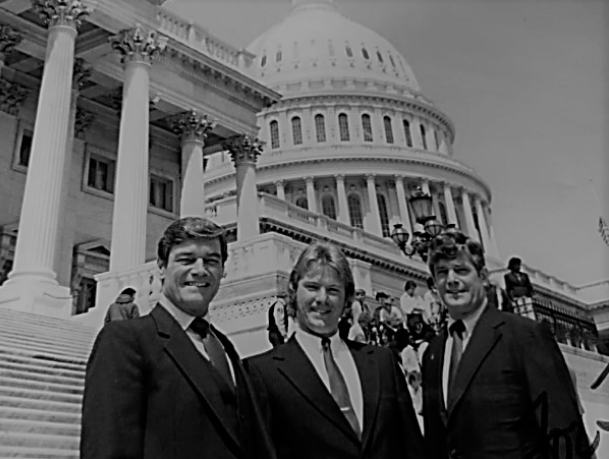
Oh, and here’s an old picture of when I worked in the Senate (1985) with two congressional Republicans! My street cred.
Read More
Posted by Nolan Dalla on Oct 19, 2026 in Blog |
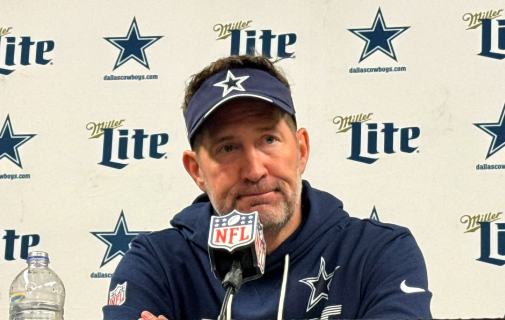
Dallas Cowboys sponsored by LITE beer. What a perfect pair. Watered down party piss in a cheap tin can.
Read More
Posted by Nolan Dalla on Oct 15, 2026 in Blog |
2026-27 NFL SEASON: WEEK 6 – ANALYSIS AND PICKS
2026-27 NFL BETTING RECORD:
WINS — 42
LOSSES — 36
PUSH — 2
NET WIN/LOSS — – $25.
LAST WEEK’S RESULTS — 10-5-0 (+ $455)
STARTING BANKROLL: $10,000.
CURRENT BANKROLL: $9,975.
ALL WAGERS ARE FOR $100 EACH AND ARE PRICED AT THE STANDARD 110/100 VIG, (UNLESS NOTED OTHERWISE)
–
Read More