On Religion and Illusions of an Afterlife — An Atheist’s Response
One of the most difficult realisms about being an atheist is the kindred sadness of knowing all connections and joys in life are finite. We are not built to last forever.
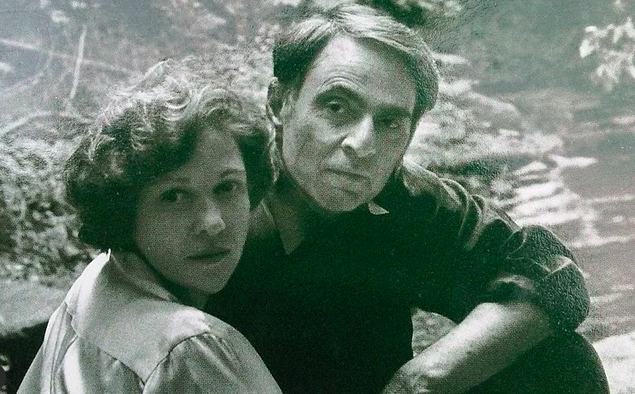
Ann Druyan — who was astrophysicist Carl Sagan’s wife of 15 years and a documentary producer in her own right and co-author the landmark series Cosmos — addressed this emotional quagmire in an interview with Skeptical Inquirer on science, religion, and being analytical, but also being full human — susceptible to both sentimentality and vulnerability.
Indeed, we can all understand and empathize why people want to believe in eternal life and other religious fantasies, if for no other reason than most faiths promise reunification with the people we lost and infinity with those we love.
When Druyan was asked about her husband’s death and how that loss impacted her own perception of life and death. She replied as follows:
“When my husband died, because he was so famous and known for not being a believer, many people would come up to me— it still sometimes happens—and ask me if Carl changed at the end and converted to a belief in an afterlife. They also frequently ask me if I think I will see him again.
Carl faced his death with unflagging courage and never sought refuge in illusions. The tragedy was that we knew we would never see each other again. I don’t ever expect to be reunited with Carl. But, the great thing is that when we were together, for nearly twenty years, we lived with a vivid appreciation of how brief and precious life is. We never trivialized the meaning of death by pretending it was anything other than a final parting.
Every single moment that we were alive and we were together was miraculous— not miraculous in the sense of inexplicable or supernatural. We knew we were beneficiaries of chance. . . . That pure chance could be so generous and so kind. . . . That we could find each other, as Carl wrote so beautifully in “Cosmos,” you know, in the vastness of space and the immensity of time. . . . That we could be together for twenty years.
That is something which sustains me and it’s much more meaningful…The way he treated me and the way I treated him, the way we took care of each other and our family, while he lived. That is so much more important than the idea I will see him someday. I don’t think I’ll ever see Carl again. But I saw him. We saw each other. We found each other in the cosmos, and that was wonderful.”
— Ann Druyan (2003)
READ MORE: My essay from 2013, “Hell Bent on a Holy Mission.”