
Living With Alzheimer’s: An Update
LIVING WITH ALZHEIMER’S: AN UPDATE
I’d like to share something deeply personal because it might help other people who are dealing with a serious problem, nationally and globally. Even if you don’t think this is an issue now, it’s very likely to impact many people out there — whether it’s ourselves or a loved one. Alzheimers (and/or dementia) will impact about one-third of all Americans at some point in their lives, either personally or someone within their immediate family.
Let me put this more directly. When you live with Alzheimer’s in your family, your entire life changes. I don’t think people who have not experienced it firsthand understand the degree to which everything in your life adjusts, and I’m just talking about those who take care of people with Alzheimer’s.
Alzheimers is a disease that cannot be cured (not yet), but it certainly can be managed. It can be managed better, and those of us impacted by it search for ways to improve the lives of those who suffer, including the true guardian angels among us — which are caretakers. [* see footnote below]
That’s what we’ve tried to do in dealing with this daily challenge inside our home as our Mom has lived with Alzheimers since being first diagnosed back in 2013.
Coming upon 13 years now is a very long time for an Alzheimers patient. Most do not survive that long. I attribute Mom’s lengthy survival to the high level of care she receives (mostly from Marieta–she’s on this full-time). It helps to also know a few little tricks, which I’ll mention later and will be the point of my writing.
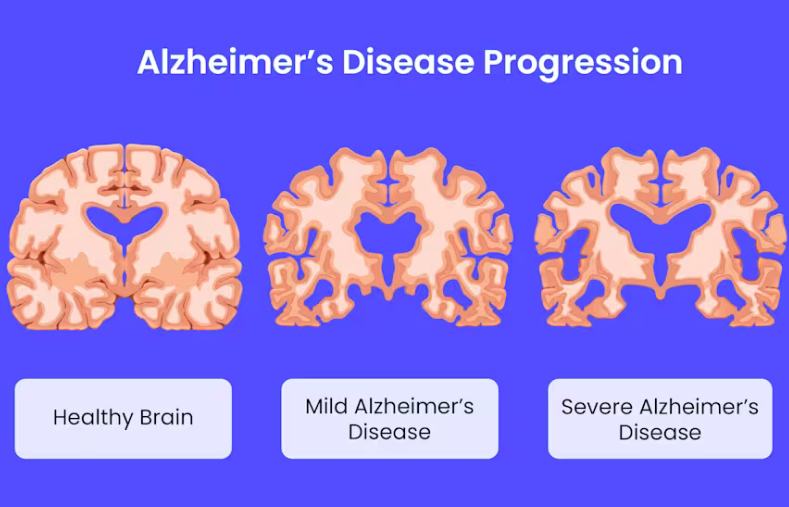
Alzheimers is a slow but certain decline of mental faculties and a steady reduction of self-sufficiency. To oversimplify what the disease is like for most, imagine an adult gradually turning back into a child-like condition. Alzheimers victims lose memory, then become unable to manage their own affairs, then can’t feed themselves, then lose bathroom functions, then can’t walk, and eventually they’re reduced to an infantile state. That’s where we are now. We’re told, the final stage is when the mind simply shuts down and doesn’t give the body the necessary commands needed to function. Obviously, this is a scary prospect and a depressing end. There’s no sugar-coating the final weeks or days.
This disease is terrible. But its also taught me things I never knew. It also gave me a much greater sense of empathy and compassion, at least I hope that’s the case. It sure gave me a great admiration for caretakers. These are the real heroes among us — those who sacrifice their own lives to care for others. I tear up when I ponder that personal sacrifice and the millions who toil quietly and silently and dutifully, and that intense dedication, and that unwavering love. Those people are much better and stronger than I am.
I also wanted to share something positive here. I’m convinced a very simple thing made a big difference in Mom’s life, and significantly reduced her suffering and mental deteriorization. What’s made a difference is ….. MUSIC.
We never let Mom stay in the house without sound, which is mostly music. We used to park her in front of the television (ten years ago), where she could watch and listen to Romanian-language TV stations, as we have an international satellite dish. Gradually, she became unresponsive to that stimuli. Next, we sat a large laptop beside her, which played religious content (Romanian Orthodox Church prayers, chants, and music–Mom has always been very religious, and that content sometimes triggered positive reactions). Eventually, she ignored everything. She simply had no reaction. Staring into space. It just wasn’t connecting.
A few years ago, we hooked up a Pandora receiver with a boom speaker, next to her chair where she spends most days. We put on a station of soft music (New Age, Soft Jazz, piano romance, classical guitar, etc.). Incredibly, she seemed very responsive to sounds. She even smiled at times and seems engaged with what she hears. I can’t prove anything, and there’s no metrics of measurement on this topic. However, I am absolutely CONVINCED music has made a difference. She has not deteriorated in the least over the past two years, maybe three years. She’s still often unresponsive, but the Alzheimers has taken a pause. Like it stopped. After reading more about this, I found out this is exceptionally rare. Usually, when someone reaches late-stage Alzheimers, the decline speeds up. In Mom’s case, it hasn’t just slowed down. It’s almost frozen in time. Again, this is very unusual — it’s usually a life span of 3-10 years after diagnosis, and she’s entering year 13, and she smiles at music and loves to eat (taste buds are active, we’ve discovered–and yeah we even give Mom beer and wine.)
Obviously, *quality of life* is a difficult moral and ethical issue with no easy answers and leads to more questions we must ask ourselves. At some point, it becomes better just to let someone go. But while they are alive and still enjoying some measure of joy, even though it’s fleeting, that’s a small victory in the daily ritual of challenges.
I have read and heard that music is good for the mind. All minds–young and old. I’m thoroughly convinced music helps us, even in ways we might not recognize. Seeing and experiencing first-hand the daily impact of sounds on one’s soul is comforting.
Those of you who must deal with others with this condition or something similar may be advised to try this — which is to play music. All the time. Fill the air.
Given what we’ve seen, music won’t cure anyone. But it does matter and it can/might make a difference. I thought this was important enough of a discovery to share with others. You may want to try it, if you know others with this condition.
* This is not intended to be a political post and I’m reluctant to bring this up except that it’s so important and obvious. The majority of caretakers in this country are immigrants, and a sizable percentage are here “illegally.” Our system has failed us. Our system has failed them. There’s an obvious need, desperate need for these workers who in the overwhelming majority of instances are compassionate, kind, good, talented, hard-working people doing the kinds of work that many of us are incapable of doing. The immigration policy and especially the restrictions thereof, will come back and haunt us is our population ages. This is a gross abdication of irresponsibility and an obvious example of hate and fear and disinformation doing harm to millions of people, yet it is we it will end up paying the highest price for our stupidity.