
Every Picture Tells a Story: With Dennis Hopper — The Palms Las Vegas (2005)
EVERY PICTURE TELLS A STORY:
WITH DENNIS HOPPER AT CINEVEGAS FILM FESTIVAL — THE PALMS LAS VEGAS (2005)
Circa 2003-2009, I attended CineVegas film festival several years in a row. Las Vegas has been featured as the backdrop in several movies. Given its close proximity to Hollywood and all the top entertainment performing here, it’s inevitable that our city would come to host an annual film festival.
Film festivals are really fun, that is–if you love movies. CineVegas usually lasted for 3 to 4 days. They screened several movies, including lots of unique films and outtakes that hadn’t been released before. Best of all, actors and directors sometimes attended these screenings and took questions from the audience about the production. This isn’t a place for selfies, celebrity worship, and autograph hounds. Film festivals tend to be much more serious and attract a more sophisticated crowd. Probably because its held in Las Vegas, most CineVegas years drew plenty of A-Listers. Even better, events were easy to get tickets to and most of the actors were eager to mix among the relatively small crowds (back then, anyway).
Somehow CineVegas managed to collar legendary actor Dennis Hopper to serve on its board of directors. He attended many years and was very involved. How do I know this? Well, he attended screenings, emceed events, spoke about small films and lesser-known moviemakers (often without notes–which shows he really knew his stuff). In short, Hopper knew what he was talking about and was incredibly accessible. Hopper was certainly an icon on screen. He was best known for playing broken men and mentally disturbed outsiders. But at the festival he was just like any other movie fan. I met him briefly a few times, stumbling for words. After all, what does one say in 20 seconds to Dennis Hopper? Still, during several screenings, Hopper would be sitting there in the next row with perhaps only 20-30 people in the entire theater. And when he spoke or emceed or was interviewed, he gave the small crowds every bit as much energy as if this was Oscar night. Hopper may have been a rebel without a cause in his earlier years, but at CineVegas he was the easy rider. A total pro.
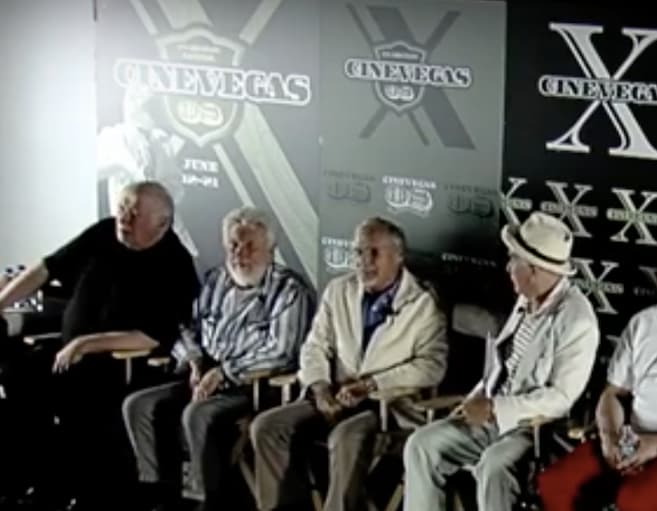
Back then, Hopper was at the height of his popularity. He was at the very top of his game around the time this photo was taken, which I believe was the summer of 2008 (I’ve not attended CineVegas since 2009, and it discontinued for a number of years–I’m uncertain as to its current status and future). This was during a press conference. I wish I’d taken more pictures; but as I said, the screenings were not venues for selfies (this was around the time smartphones and snap photos were coming around).
That year, I saw Hooper at multiple events. First he emceed a short presentation for an artsy avant-garde 1965 film about a piano moving company desperately trying to transport a grand piano out of a Victorian home on a slope in San Francisco. This sounds like a Marx Bros. comedy plot, but it really was a short movie and hearing Hopper and the director reminisce about making the movie so many years later was fascinating.
Hopper also screened his long-forgotten 2003 biopic, The Night We Called it a Day. In that bomb of a film, Hopper played Frank Sinatra. Imagine that. The movie was based on a true story–Sinatra’s disastrous 1974 tour visit to Australia. Prior to opening night, Sinatra insulted a well-known female Australian reporter (he called her “two-dollar whore.”), prompting public outrage and a subsequent national boycott of his scheduled concerts. Unions who were working the shows even pulled out, leaving Sinatra fuming among his entourage for days inside a Sydney hotel room. Hopper’s portrayal of Sinatra is far better than one expects, but otherwise the movie is terrible. Hearing a top actor like Hopper discuss one of his “failures” is in many ways more interesting than hearing about the successes. Another good thing about film festivals, unlike the fake PR hype that accompanies all new movie releases, the independent (non-commercial) format geared to audiences who look upon cinema as art allows for a more honest perspective, and even lots of criticism and self-deprecation. Maybe it’s just that Hopper was so raw and unfiltered that made him appealing.
However, Hopper’s most intriguing event (that I attended) were his 16 mm home movies taken during the filming of Cool Hand Luke. The 1967 classic starring Paul Newman and George Kennedy (who won an Oscar) also included Hopper in the cast. He played one of the prisoners on a chain gang. The scenes of the prison labor road crew working in the oppressive heat was supposed to be someplace in the Deep South. It was actually filmed in Stockton, CA. Hopper was interviewed onstage by famed film critic Elvis Mitchell. He remembered the bottles of baby oil all the “prisoners” were constantly slathering onto their bodies, while giant faux mirror filters made it look like the blazing sun was baking them in sweat. Actually, the scenes were filmed in October in rather cool 50 degrees on most days. But in the movie it looked like it was 98 degrees in the suffocating heat of rural Alabama. As you would expect, Hopper’s stories from the Cool Hand Luke film shoot were mesmerizing and to see his rarely-seen home movies of the set-ups, outtakes, etc. were a real treat.
Today, Dennis Hopper is no longer with us, though he’ll live for eternity in the many memorable characters he portrayed in film. Hopper died in 2010 of prostrate cancer. I’m glad to have attended CineVegas in the past. I mean, how often can you rub shoulders with someone who appeared in Rebel Without a Cause, Cool Hand Luke, Easy Rider, Hang ‘Em High, Head, True Grit, Apocalypse Now, Hoosiers, Blue Velvet, Speed, Crash, True Romance, Rumblefish, and Giant?
As for Las Vegas, our city will soon expand its movie-making footprint. Sony Pictures is scheduled to start construction on a big studio complex in Summerlin, near where I live. Call this turning the page, but never forgetting what was in the preceding chapter.