



Christmas for Antitheists
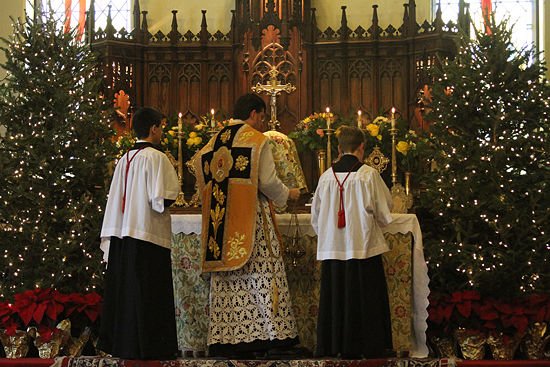
Can someone who doesn’t believe in the existence of God also celebrate Christmas?
Certainly yes.
Christmas, ostensibly intended to honor the birth of Jesus Christ, has become far more than just a religious holiday. Cynics might even suggest it’s become the antithesis of a religious holiday.
Turn on the television set or visit a shopping mall during the week before Christmas and you know exactly what I’m talking about. Commercials enticing you to rush out and buy a brand new Lexus aren’t very Christ-like. The soccer mom in the mini-van who steals your parking spot isn’t thinking about Jesus, although his name probably comes up in some rather creative combinations of language.
It’s too bad really that the essential message of Christmas was hijacked a long time ago. Modern Christmas would likely be unrecognizable to those who envisioned its oldest traditions. It’s become the five human senses all pumped up on steroids. That’s both good and bad. Sure, everything tastes better and smells better. Many of us feel better. The sights and sounds of the holiday season are more beautiful than other times of the year. But sensory overload isn’t always synonymous with happiness. For many less fortunate people, this is a depressing time of year — and none of this has anything at all to do with faith or religion.
If Christmas didn’t exist, we’d probably invent such a holiday all the same. Reflective of the society we really are and the things we value most, Christmas is a capitalist’s wet dream, a drunken sailor on annual shore leave, an acceptable excuse to spend like there is no tomorrow.
The better part of late November through December 25th (and now — even the week after Christmas) is a national shopping spree. Forget about going to the Mall of America. America is the mall. Far more time is spent buying things, wrapping things, unwrapping things, re-gifting things, and returning things than giving reverence to a historical event that supposedly happened somewhere in the Middle East approximately 2,013 years ago.
Remember that guy? He was known as “Jesus of Nazareth.”
Now, there’s nothing to actually suggest “God” exists. But — regardless of what you may or may not believe — there’s some compelling evidence that someone who later became known to billions as “Jesus Christ” actually lived in and around what’s now Jerusalem during the first third of the first century.
And, if the stories are to be believed, and there are some real whoppers — alas, even if half of what’s been told is true — then Jesus Christ was a remarkable man. Whether or not you believe he was the actual son of God (I don’t), you have to admire the man’s conviction. His extraordinary courage — even more so. He willingly went to a torturous death for a noble cause. It was a cause that was genuine and admirable. You need not be a “Christian” to believe that.
Jesus’ message of love and tolerance was shocking during his day — even revolutionary. The message was so incendiary that he was tried as a political activist. Oddly enough, there’s a sad irony in modern Christianity’s lock-step alliance with political conservatism, when fact was — Jesus was one of the greatest liberals in history. Indeed, Jesus embodied the counter-culture of his times. He was a hippie, perhaps the first. The original beatnik. The poet of not only his generation, but of all generations. And, the messages he preached then inspired millions and later billions for centuries to come. Anti-establishment? Check. Anti-government? Check. Anti-religious authority? Check. Against crass commercialization? Check. In favor communal approaches to sickness and health? Check. If Jesus Christ lived in America today, he’d be to the left of virtually every elected public official and person in the clergy.
Years after his death (and some claim his resurrection), his teachings led to wonderful things. For a time, people treated each other more kindly. Believers enjoyed a greater sense of community with the establishment of churches. Civil codes came to reflect the teachings of the Old Testament. The church provided charity. And much later, Jesus’ teachings led to civil rights.
But his words were also terribly misused. He beliefs were twisted. This led to unfathomable crimes against humanity — things like the Crusades, the Inquisition, witch hunts, slavery, and a war on science and enlightenment. Some of these crimes performed in the name of Jesus continue to this day.
And so this Christmas, we should all remind ourselves that the noblest virtues taught by Jesus Christ are universal. Believers in God have no monopoly on performing good deeds. In fact, those deny God’s existence are often just as good. I would even go so far to argue that — when it comes to some issues — we anti-theists are more in line with the teachings of Jesus than many self-professed “Christians.” All one must do is look at modern church doctrine of examine various forms of Protestantism and the archaic positions of the Roman Catholic Church — which irrefutably inflict misery on millions around the world. It’s not the anti-theists who outlaw birth control, subjugate women, cover up institutionalized scandal, deny gays a rightful place in society, or try and control and condemn the behavior of others. That always seems to be a “Christian thing.”
Of course, this all makes my background and beliefs a seemingly ridiculous contradiction. I was raised Catholic and even attended Catholic school for some time. To this day, I remain in awe of the power of the church and the magnificence of many of its glorious traditions. Then again, I’m also revolted by what Catholicism has done over the ages and its current doctrine on many issues.
Similarly, there’s a majesty about this holiday which deserves the widest possible recognition and observance. It’s perfectly acceptable to celebrate and even rejoice in this holiday without accepting any of its basic precepts. It’s okay to weep at the sound of Christmas carols, as I sometimes do. In doing so, we don’t necessarily have to believe their words. Fairy tales can be marvelous, too. But that doesn’t mean they’re true.
I do very much believe in Christmas and wish you a merry one.
People of all faiths, and even those with no faith in a deity, share common interests. Today, our prayers and hopes are symbolically renewed. We all wish for similar things — namely peace, love, and joy. Those aren’t just religious principles. They are humanist principles, as well.







0 Comments
Trackbacks/Pingbacks