



When Art and Inspiration Meet Science and Technology (“Tim’s Vermeer”)
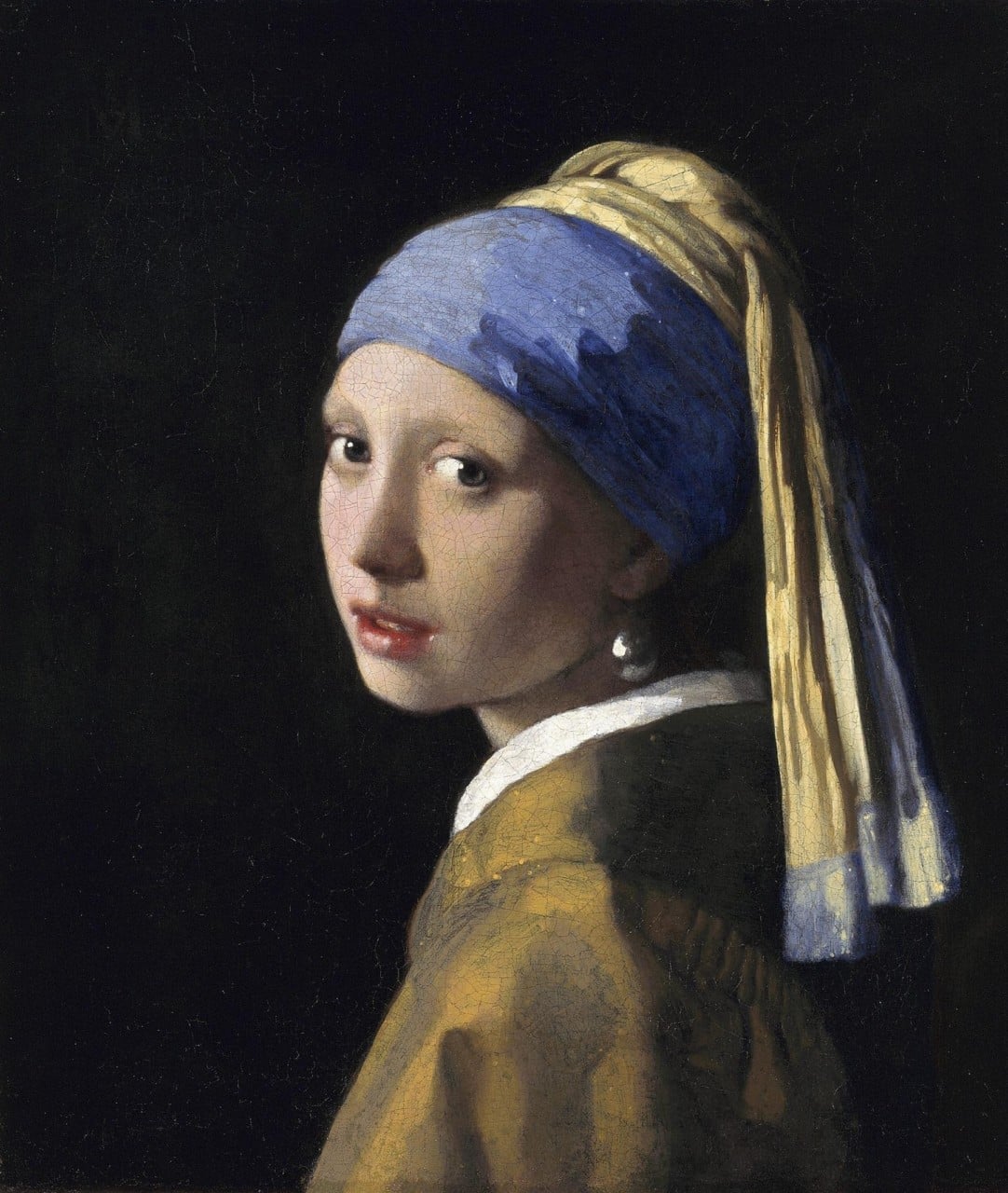
“Tim’s Vermeer” comes as a new documentary by the magical duo known as Penn and Teller.
Dutch painter Johannes Vermeer is probably best known for his masterpiece Girl with a Pearl Earring, shown above. The 17th Century artist used brilliant colors guided by a rock-steady hand to capture real-life scenes of what common life and daily living were like in the midst of the Renaissance.
Oddly enough, Vermeer’s masterworks, which were completed nearly four centuries ago, have become the topic of a more recent debate as to precisely how the artist with little or no formal training was able to create portraits of such fine detail and astonishingly high quality. While this debate is pretty much narrowly limited to art history enthusiasts, the basic precepts invoke a far more relevant discussion about the ways we perceive art and technology today. Not that art and technology are mutually exclusive.
“Tim’s Vermeer“ comes as a new documentary by the magical duo known as Penn and Teller. Directed by Teller (he’s the short, silent one) and narrated by Penn Jillette (he’s the tall, not-so-silent one), the film which starts off with a simple and singular purpose. However, the mission becomes so much more than that as we take a journey, go back in time, and ultimately try to solve a mystery. Finally, we’re left to ponder what it all means.
The title character in “Tim’s Vermeer” is Tim Jenison, a wealthy inventor-businessman who now lives in San Antonio. Vermeer, of course, is Johannes Vermeer, the Dutch painter who apparently had little or no training at his craft, did no formal apprenticeship as an artist and enjoyed only modest success while alive. However, following his death in 1675, Vermeer became widely celebrated as one of the great masters of the canvass. More than any other artist of his era, Vermeer was able to reproduce imagery of nearly photographic quality. Indeed, most of his works appear to be almost perfect reproductions of the people and places around him. So, how did he do it?
All talent is suspect. We’re eager to know more. We marvel at genius and want to know the secrets of the master craftsman, whatever the pursuit. And so, when English artist-critic David Hockney examined Vermeer’s works a bit more closely, he discovered and ultimately became convinced the Dutch artist enlisted the help of a most unusual source — the basic laws of science. Hockney’s theory was that Vermeer used sophisticated (for its day) optical devices to project the people and objects he was painting onto a canvass. Then, he merely filled in the colors with paint. In a sense, all that’s missing here are numbers and outlines.
Tim Jenison goes one step further and puts this theory to the test — the supreme test. Though he didn’t realize the daunting task that was ahead of him, the film documentary becomes not just an art history lesson, but a human story. The camera follows Jenison around over what turns into a five-year period of a relentless pursuit to recreate one of Vermeer’s most revered paintings. Along the way, Jenison spares no expense nor omits any detail in his effort (some would say obsession) to determine if Vermeer employed techniques that would be more closely associated with science and technology, rather than art, which presumptively is spawned by natural talent.
The charge that such a great artist essentially etch-a-sketched his way into the pantheon of masters does seem blasphemous. While not exactly deceptive, the notion that Vermeer took his paintbrush and traced the lines of images projected through a special lens onto what we now revere as his “paintings” ignites very real passion as to what truly constitutes art.
Penn, who appears frequently on camera in “Tim’s Vermeer,” offers his own assessment. He not only blurs the traditional lines of distinction between science and art but obliterates the disjuncture that they must be partitioned. To the contrary — art is science, and science is art, Penn insists.
Still, one has a hard time appraising the artistic merits (or lack thereof) of what’s ultimately created in “Tim’s Vermeer.” Jenison rightfully deserves admiration for his painstaking sacrifice, recreating every precise detail of Vermeer’s studio and the painting techniques he used. Trouble is, Jenison isn’t a painter. In fact, until this project began, he’d never drawn nor painted before. However, the technology Jenison recreated enabled him to paint a picture that’s every bit as impressive as the original created by Vermeer, some 350 years earlier. To be clear, Jenison is certainly no average guy off the street. He’s a remarkable man and master of innovation. But he’s no painter, either. So if he could paint “a Vermeer,” then what’s the big deal?
This now brings us to the deeper implications of Vermeer’s “short cut.” Does using science and technology somehow diminish the final product? Is a painting (or any other artistic masterpiece) any less impressive if we discover that it was created “artificially?” Or, to the contrary, might being the innovator of a new technique actually make the completed work more praiseworthy?
It depends. No one would think any less of architecture, which is arguably the supreme melding of science and art. A grand building embodies techniques of both worlds, blending them together into a structure that’s both functional and appealing to the senses. Accordingly, one could argue that Vermeer was a lot more like Frank Lloyd Wright (who embodies the widest possible gambit of these combinations) than his 17th Century contemporaries.
There’s an obvious correlation to the questions raised by Vermeer’s techniques which apply to modern culture, including popular music. Traditionalists might insist music must consist of human voices, real instruments, and the rarest of talent. But what are we to make of music created by machines? What about music composed by advanced software programs? Is such music diminished by the aid of the same technology one can purchase for $79 at Office Depot? Indeed, we’re left to ponder these same questions in “Tim’s Vermeer.”
After watching Jenison spend five years of his life recreating a single painting, and after watching him paint for 130 consecutive days on a canvass no larger than a desktop, and after observing his passion for this project, I’m reminded of Thomas A. Edison’s famous quote, which seems the be the best summation, and something we can agree on. “Genius is one percent inspiration and ninety-nine percent perspiration,” he said.
There’s a beauty to science that becomes more apparent the more we know about it. Things created in the natural universe surpass anything that’s even conceived by humankind. However, as we slowly begin to harvest and assemble nature’s wonders and make them our own, art is not merely born, but reconstituted.
Vermeer apparently understood this long before anyone else. Only now, nearly four centuries later, are we finally beginning to realize art and science are indeed one and the same.

READ MORE: A visit to Penn’s home







Well…. Hmmmm…. How Ahhh bout that
This theory about Vermeer has been around for some time. The device is a “camera obscura.” More (lots of) detail is here:
http://www.essentialvermeer.com/camera_obscura/co_one.html#.UzyiQVfQwV8