Pages Menu
TwitterFacebooklogin
Categories Menu

Posted by on Apr 5, 2014 in Blog, Las Vegas, Politics | 9 comments

Ten Things Las Vegas Desperately Needs to Do


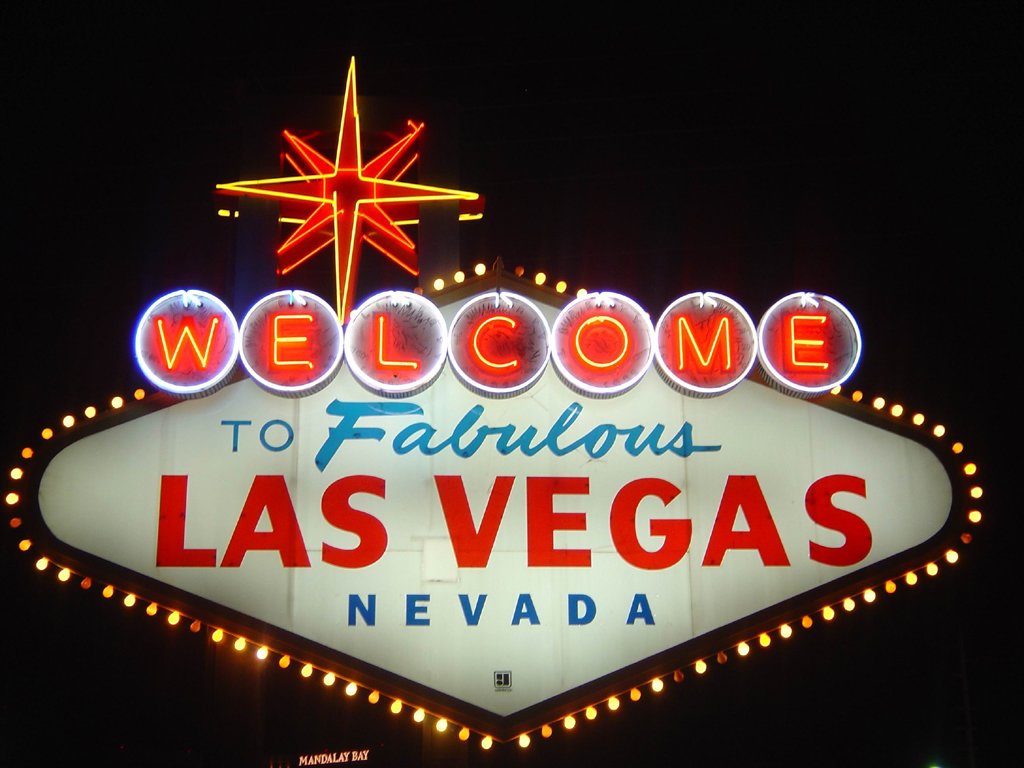
las-vegas-sign


Las Vegas is growing again.

According to reports, the city and surrounding area added 100,000 new residents within just the past year.  This news is both good and bad.

It’s good because local property values, which took the biggest hit in the nation right after the 2008 economic crisis, are inching closer back to the break-even point for many homeowners, who relocated here and then found themselves on the wrong end of upside-down mortgages.  It’s also a symbol of economic vibrancy, sure to entice businesses currently based elsewhere to move to Las Vegas, which has a plentiful supply of affordable labor.

It’s bad too.  Las Vegas doesn’t really need any more residents.  Its limited resources — mostly a diminishing water supply — are already stretched perilously thin.  Lake Mead is at its lowest level ever and the problem is getting worse.  Air quality continues to deteriorate.  And local traffic is a mess.  Las Vegas doesn’t need any more cars on the streets or people struggling to make ends meet.  It’s already got plenty of that.

Here are ten things Las Vegas should do which will improve the quality of life for most residents and make the city a far more attractive place to visit:

1.  Stop releasing federal land for new development — Las Vegas has plenty of lands available for commercial and residential development.  Yet, under intense pressure from developers (most of them based out-of-state), the Bureau of Land Management (BLM) continues to release federal land in the surrounding areas to speculators and developers.  Unfortunately, much of the latest developments pose a serious threat to the picturesque Red Rock Canyon area located on the city’s far west side.  A ten-year “land freeze” would force developers to invest more heavily in urban areas (inner city) which desperately need more jobs and opportunities.

2.  Expand and improve the Las Vegas monorail — Whoever signed off on or had anything to do with the planning of the current monorail system should be banished from the city.  It’s a disgrace — one of the most abominable mass transit projects ever built.  First, it’s ridiculously expensive to ride ($5 for a one-way ticket, and $14 for a 24-hour pass).  Contrast passenger fare costs with other major U.S. cities which are usually no more than a few dollars.  Worse, the route deviates off the Strip and isn’t convenient for most visitors.  But the biggest crime is the monorail not extending all the way to and from McCarran International Airport and Downtown.  The solution is to extend ridership to the airport, and then downtown.  Moreover, lower fares would probably create more net revenue since more riders would take the monorail rather than taxis.  As it stands now, the Las Vegas monorail is a white elephant and a symbol of poor planning and gross mismanagement.  Let’s start over again and do it right this time.

3.  Ban all commercial vehicles from the Las Vegas Strip — Have you seen these giant trucks which are nothing more than huge billboards trolling up and down the Las Vegas Strip 24-hours a day?  They’re about as useful as bad cholesterol.  Billboard truck drivers are instructed to drive slowly back and forth, more so at the busiest times, adding to what’s already a severe traffic problem, noxious air pollution, and other problems caused by needless congestion.  Not only should these worthless vehicles be banned from the city, but all commercial traffic should also be diverted to alternative routes located on both sides of the main thoroughfare — namely Koval/Paradise to the east and Frank Sinatra/Industrial to the west.  It’s not 1975 anymore.  The city has grown beyond the capacity to accommodate all the traffic that’s here.  So, let’s start establishing some priorities.  City planners must begin imposing restrictions on which vehicles should be permitted on the city’s busiest boulevard.  Ban all trucks and billboard pests.

4.  Build a new sports stadium north of downtown — Sports stadiums are controversial.  They’re not always an ideal allocation of public finances.  However, sports arenas and outdoor stadiums have most certainly spawned economic development and are (in many cities) a net gain for the local economy.  Las Vegas is the largest city in the nation (by far) without a modern outdoor sports arena.  By this, I mean a stadium that could accommodate sports such as football, baseball, and soccer as well as outdoor concerts.  UNLV desperately needs a new stadium.  The city must construct a venue if it’s to lure an existing spots franchise.  Finally, the only outdoor arena capable of holding large crowds is the Las Vegas Motor Speedway, an eyesore in an industrial area on the outer fringes of the city, hardly an appealing venue.  The ideal location for new a multi-purpose sports arena would be in the area to the north of downtown, where the minor league baseball stadium Cashman Field already exists.  Most of that is already city-owned land and would be relatively cheap and easy to build upon.  The renovation of downtown that’s currently underway (led by Zappo’s) would also give a new stadium an instant urban feel, where locals and visitors could walk from residential and commercial areas to events.  UNLV home football games would become the hottest ticket in town.  This would be even more so for a major league baseball franchise (and several clubs are losing money and could probably be enticed to relocate).

5.  Build and modernize federal highways connecting Las Vegas with both Los Angeles and Phoenix — This is largely a federal matter since interstates are built and maintained by the Department of Transportation.  Nevertheless, the current state of highways between Las Vegas and its closest big city neighbors is a disgrace.  No other cities anywhere in the nation with 2-million or more residents offer as poor roads as now exist between Las Vegas-Los Angeles and Las Vegas-Phoenix.  In fact, there is no direct route to and from Phoenix.  Travel anywhere else in the country and you’ll see modern roads between major cities with multiple lanes.  Yet, the highways connecting Las Vegas to its neighbors are pretty much the exact same highways that existed 40 years ago.  Nice job, Sen. Harry Reid.  Thanks for nothing.

6.  Create enterprise zones in economically-depressed areas — North Las Vegas is on the verge of collapse.  Other areas of the Las Vegas Valley are similarly depressed.  One viable economic strategy which has proven to be successful in many large American cities is the implementation of what’s called “Urban Enterprise Zones,” initially championed by the late Congressman Jack Kemp during the 1980s.  Enterprise zones provide tax incentives for developers to invest in blighted areas.  They may reconstitute city land for shared revenue projects with private industry.  Most of these areas are ignored and forgotten.  However, if a moratorium on new land development was imposed, investors and developers would be forced to move into urban areas, which desperately need a boost.  It’s important to note a lot of these projects complement one another.

7.  Prohibit panhandling at intersections — Begging at intersections has become a regional epidemic.  One can’t drive anywhere now without seeing a “homeless person” with a sign begging for money.  While many of these unfortunate people are victims of the hoax of unrestricted free-market capitalism, quite a few made very bad decisions in life (drug abuse, alcoholism) and are now paying the consequences.  Homelessness in Las Vegas will certainly continue and we need to start a debate as to what we should do about it.  So, let’s quit ignoring the problem.  This won’t be solved with open begging at intersections.  Vagrancy is bad for communities and is hardly the springboard needed by the poor to move into jobs or establish self-reliance.  What may be needed is a state income tax (or city tax perhaps) in order to institute a safety net for these desperate people.  In the meantime, we need to clear the streets of people who endanger themselves and others by standing in traffic and are a blight on the community.  Yes, I know — I’m starting to sound like former Mayor Rudy Giuliani.

8.  Build more street tunnels under the Las Vegas Strip — The Desert Inn’s east-west underpass has arguably been the wisest initiative of urban-planning in many years.  Yet, despite its unquestionable success — which alleviates thousands of cars from being forced to cross Las Vegas Blvd. and tie up surrounding intersections — we’ve built no other tunnels since then, and that was 20 years ago!  Why not?  Nothing is even planned in the future, which means we’re likely to have the same transportation grid in a decade that we have now — only with lots more cars and people.  That’s highly irresponsible.  Las Vegas has proven to be an abomination of urban planning (there’s been little or no government leadership on this, until the last decade or so).  There’s absolutely no excuse for this.  After all, the land here is mostly flat and unrestricted.  There are no natural barriers, bays, or rivers, which normally impede local transportation systems.  For Las Vegas to continue having such a poor transportation infrastructure given virtually no logistical challenges is mind-boggling.

9. Add a medical school at the University of Nevada-Las Vegas — What I’m about to write is both staggering and shameful.  The entire state of Nevada has precisely one medical school.  That’s right — just one.  The fastest-growing sector of the national economy is severely stifled within our community, largely because of the medical establishment’s (American Medical Association) reprehensible stranglehold on the process of new prospects entering the medical field.  In essence, many medical professionals don’t want any competition.  They want fewer licensed professionals so they can maintain a monopoly over our health.  So, because we have so few medical schools pumping out new doctors, waiting times increase in offices and doctors spend less time with patients.  This is a travesty!  Solution:  MORE DOCTORS, MORE NURSES, MORE MEDICAL PROFESSIONALS.  Yet under the current system, prospective doctors have only one option in this entire state to get an education and obtain training, which is at the University of Nevada (Reno), located some 400 miles away.  How can a population center with two-million residents not have a medical school?  UPDATE:  It worked!  READ HERE

10.  Your turn — ???  What do you think?  What did I miss?


Read More

Posted by on Mar 31, 2014 in Blog, Politics, Talking Points, Video 1 | 12 comments

The Debut of “Talking Points” — Episode 1 on Writing, Media, Sheldon Adelson, Politics, and Campaign Finance


nolan dalla


Today, I’m trying out a new idea.  I’d really like your feedback.

Several people suggested that I try creating a video edition of my daily rants and writings.  In other words, instead of writing an essay, instead, just step in front of a camera and start talking.

Well, I decided to give this a try.

No script.  No plan.  No agenda.  Just talk.

What follows is an unrehearsed and unedited clip that runs a ridiculously long 32 minutes.  I decided to call it “Talking Points.” 

Read More

Posted by on Mar 22, 2014 in Blog, Personal, Politics, Travel | 7 comments

My Experience of Getting Detained by the National Security Agency


NSA-Entrance

This is the only photo I can legally show you of my recent visit to the National Security Agency.


Three flaps of a starlet’s wing off the Baltimore-Washington Parkway, peering over and above the surrounding treetops of piney woods nestled in the rolling Maryland countryside, there’s an ugly rectangular building tiled in the grey-mirrored glass.

Several buildings actually.  They’re grouped into one ominous compound, almost in circle-the-wagons mode, purposely secluded from the outside world and walled off by high-fences topped with razor-wire, ringed by heavily-patroled parking lots with late-model vehicles driven by black-ops bureaucrats.

It’s them versus the world.  Within their universe, everyone is a suspect.  All are potential enemies, even those who walk in and out of those ugly rectangular buildings every single day.  No one is trusted.

Every movement within and around the compound is monitored by non-stop surveillance.  All the time.  Everywhere.  And — those suspicious eyes and nosy ears extend way beyond just the piney woods.  They know what we do.  They know what we say.  They know what we write.  They know what we text.  All this leads to speculation about what’s coming next — will they ultimately know what we think? 

This place has no visitors.  This place doesn’t welcome guests.  This place might as well not exist at all.  Aside from the towers and wires and otherwordly white domes, those ugly grey buildings might otherwise blend in well with the broader and more expansive federal quilt of the national security and defense establishment which has come to blanket (some would say suffocate) the greater National Capital area, a mammoth region of three states growing by the month which now stretches from just south of Baltimore all the way down some 50 miles south through the District of Columbia, across the Potomac, into Northern Virginia and on to Triangle and Quantico — best known as the home of the U.S. Marine Corps, and what’s known in intelligence inner circles as “The Farm.”  [See Footnote 1]

This is a complex of secrets and secrecy.  It’s an arena of perpetual paranoia.  It’s a regimented information labor camp where the loyal foot soldiers who come and go 24-hours-a-day, 365-days-a-year, are the spookiest of spooks.  Not because they’re evil people.  Rather because they’re so extraordinarily knowledgable and powerful, and yet so ordinary.

Today’s superspy isn’t James Bond sitting at a Baccarat table sipping a martini.  He (and increasingly she) is a GS-11 civil servant wearing some cotton-polyester blend purchased on sale at Target with kids’ soccer games to attend on Saturdays.  This is what the national defense establishment has become — not massive armies of soldiers and tanks and navies of battleships — but countless anonymous faces toiling silently behind desks topped with the latest flatscreens who can change lives with a single mouseclick.

And yet, it’s all such a mirage.  As hard as this secret place tries to dissuade the curious from gazing beyond the fence or speculating as to what nefarious deeds happen behind those mirrors of grey glass, the bunker mentality within triggers quite the opposite response.  Any impartial observer is left to conclude that no place that’s this inhospitable can possibly be up to much good.

Earlier today, I found this out firsthand.

On Friday, March 21st, the National Security Agency detained me for nearly two hours for “trespassing into a restricted area.”  What follows is the story of that most unusual ordeal at the entrance to the smartest building in the world.

[See Footnote 2]

***************

The signs off the Baltimore-Washington Parkway read as follows:

NSA — NEXT RIGHT

NSA — AUTHORIZED VEHICLES ONLY

NSA — RESTRICTED ACCESS

Naturally, I didn’t heed any of the warnings.  I didn’t follow the rules.  I’m stubborn, some might even say stupid.  Point conceded.

I wondered.  What would happen if I pulled into the parking lot of the National Security Agency?  Does anyone ever test their security?  Remember, this is unabashedly America’s most secretive government agency.  Its size, scope, staff, and budget exceed that of the Central Intelligence Agency.  That’s right, it’s bigger than the CIA!  And up until a few years ago, most Americans probably couldn’t even tell you what “NSA” stands for.  Accordingly, let me try and explain.  Put into simple terms, it’s where all the phone conversations and e-mails, and texts from just about anywhere in the world are collected, analyzed, re-analyzed, and stored.  It’s the world’s largest communication database.  But if this all sounds like the Library of Congress, think again.  It’s not.

See, there’s a little problem.  That’s because there are some legitimate questions as to what exactly is going on inside the NSA, and how much of what they do is legal.  Come to find out, much of what they do is illegal.  They’re now spying on Americans.

And hardly anyone is doing much about it.  Short of fighting in the courts and trying to reduce their budgets (which are top secret), there’s not much we can do about it.  We’ve all become targets.

***************

I did have some legitimate reasons for visiting the National Security Agency, beyond simple curiosity and some misguided fantasy to engage in political protest.

In town this weekend on a Poker Night in America television shoot, Maryland Live Casino is only a few miles away.  In fact, off the road from the distance, the huge casino might very well be indecipherable from the NSA building, or any other large government installation in the area.

My crazy idea was to have a few of the poker players “accidentally” make a wrong turn off the B/W expressway, end up stuck in the NSA parking lot and get thrown out of a restricted area by uniformed police officers.  Then, capture it all on film.  I wondered — what would happen if a few well-known poker players pulled up into this forbidden zone?  What’s the worst thing that could go wrong?  Being asked to leave?  What are they going to do — shoot Darvin Moon?

Well, I wasn’t about to let our cast and crew take such a monumental risk without a trial run.  Who knows what the NSA might actually do if they saw us with a bunch of electronic equipment and movie cameras?  They could seize everything we own, arrest us, and ship us off to Guantanamo.  As appealing as it seems to have Steve Dannenmann waterboarded, I wasn’t going to gamble the entire production on the whims of some security official carrying a sidearm at the National Security Agency.

I’m dumb, but I’m not stupid.

So, I was willing to play the unrehearsed off-camera role of guinea pig-sacrificial lamb-test dummy.  At 2:30 on Friday afternoon just as a cold rain began to fall over central Maryland, I ventured off on a lonely road.  I took the forbidden exit.  Moments later, I would find myself detained and under interrogation.  [See Footnote 3]

***************

While driving and slowly approaching that ugly grey building, I rolled down my car window and snapped several photographs, I’d later learn a federal crime that carried the possibility of five-year imprisonment and a $10,000 fine, per offense. 

The photos had innocuous intentions really, simple location shots which were meant to be shared with the crew when and if we decided to go through with the crazy idea of filming the poker players testing America’s most fiercely-protected bunker of homeland security.

Suddenly out of nowhere, someone I couldn’t see and from a place unknown shouted — PHOTO!

PHOTO!  WHITE CAR!  NEW YORK PLATES!

At that instant, I’d reached the front gate to the NSA employee foot entrance.  Apparently, I’d made it further inside than most unwelcome guests.  A perfectly-chiseled federal officer brandishing a depot of automatic weapons with several live rounds of ammunition with arms reach stepped out from a hut and approached the car.  The following conversation ensured:

“What’s the nature of your business here, sir?”

“I’m on a location shoot for a new television show.”

“Were you taking photographs?”

“Yes, sir.”

“Why were you taking photographs?”

“As I said, I’m here scouting a place to film a new television show and I wanted to see if there was a visitor’s center where I could come and ask permission.”

This is protected property.  We don’t have a visitor’s center.” 

“You mean like, you don’t give tours?

Ooops.  I didn’t mean to come across as a smart ass.  But sometimes I can’t help it.  It’s in my nature.  From the instant those words left my mouth, I realized that was the wrong thing to say.

“Sir, pull your vehicle to the side.  I will need identification and proof of registration.”

“It’s a rental car.”

Within minutes, five squad cars emblazoned with NATIONAL SECURITY AGENCY POLICE pulled up beside me.  Uniformed officers stood around as another man in a suit began asking me the questions.  Oh, and it was raining.

Not good.

****************

I was detained for an unknown period of time, perhaps a few hours.  It seemed longer than it was.  I was forced to wait until employees began streaming out of the building.  One presumes this must have been at least 4 or 5 pm.  The workers consisted of all kinds of people wearing different military uniforms (fatigues, dess unis, camouflage) and civilian clothes — a mishmash of career spook bureaucrats bonded by regiment and patriotism.

My records were apparently searched during this period of detainment.  I can only speculate what databases were accessed.  Fortunately, my record is clean, despite some very odd associations over the years.  Other officers came up and asked questions.  Others surrounded the car.  Then, yet another officer approached and asked me to step out of the car.

This really wasn’t good.

Oh shit, I thought.  Did they find my website?  All that anti-defense budget stuff and the pro-Palestinian sentiment aren’t going to go over very well with this crowd.  The second officer started to grill me all over again.

“Mr. Dalla — normally, I would ask you like 60 questions.  We have to make sure you’re not Ivan the Terrible coming to take us down.”

“I understand, officer.  I’ll answer your questions honestly.  I assure you I will cooperate.”

So, we went through it again.  And again.  I repeated myself, with the same recount of what happened.  Obviously, the officers were looking for consistency.

I knew I’d be released — eventually.  I wasn’t in any real danger.  But I sure could have been inconvenienced a great deal.  And, according to law, I could have been hit with heavy fines, even imprisonment.  This is the iron grip that permeates within a nation that sacrifices its liberties for “national security.”  Yeah, there’s a valid reason to protect federal installations, especially places where sensitive work goes on.  I get that.  I don’t like it.  But I get it.  I wish there was more transparency.  But, that’s the world we live in, especially in a post-9-11 age.

My cell phone was confiscated.  It was checked and re-checked.  Photos I had taken earlier were erased (with no objection from me).  I was informed that each photo of a restricted area carried a potential $10,000 fine and five years imprisonment.  Adding up a dozen photos, that could have been quite a heavy penalty.  And I don’t think they take MasterCard.  [See Footnote 4]

Clearly, the intent was to intimidate me.  It worked.  I was ready to get the hell out of there, with no desire ever to come back.  Mission accomplished.

In fairness to the security officers, they were polite and professional throughout the ordeal.  They were also firm and businesslike.  I was treated fairly and respectfully.  No complaints.  My beef is with what goes on inside that ugly building.  That’s where our lives hang in the balance of a microchip.

Once my name finally checked out after a mega-search and my identity didn’t trigger an alias for Ivan the Terrible, my identification was returned.  I was released and permitted to go on my way and was escorted out of the restricted area.

***************

So, what secrets do lie within?

What do they really know about what we do?

Moreover, what shall become later of this information they gather?  Perhaps most important what will “national security” mean within our society in another decade, or two?  What will they know about us all then?  Will anyone care?

I wonder — will there be any secrets left?

They’re watching us.  But who’s watching them?

Footnote 1 — “The Farm” is where many covert operatives within the Central Intelligence Agency are trained.

Footnote 2 — Read more about this most secretive of federal agencies here at the National Security Agency Wiki page.

Footnote 3 — This was actually the second time I’ve pulled into the NSA parking lot.  About 15 years ago, I ran out of gas while driving on the B/W Parkway, and coasted off the ramp into the same parking lot (it’s been renovated since then, I came to find out).  I was provided with a free can of gas and was escorted off the property, without incident.

Footnote 4 — The federal officer explained that no photos are permitted which might also contain employee faces or license numbers of cars in the parking lot.  The fear is “the enemy” could target an NSA employee.  So, any imagery of the NSA you see in media has been doctored where all means of identification are removed.  A search of “NSA PHOTOS” reveals only stock photos of the building and generic shots of some insensitive areas. 

Read More

Posted by on Mar 20, 2014 in Blog, General Poker, Las Vegas, World Series of Poker | 0 comments

Mitch Garber vs. Andy Abboud — Best Sound Bites


Howard Stutz, Mitch Garber, Nolan Dalla

Howard Stutz (Reporter, Las Vegas Review-Journal), Mitch Garber (CEO, Caesars Interactive, and WSOP.com), and Nolan Dalla


The opening day of the IGaming North America 2014 conference took place yesterday at the Planet Hollywood Casino, in Las Vegas.  Read my initial reaction here:  Andy Abboud Melts Down at IGaming North America Conference.

Read More
css.php