
Here’s my seventh musical retrospective on the best albums released, by year. My previous “Best Albums” lists covered 1976, 1977, 1975, 1978, 1974, and 1979 (in that order).
—– Summation —–
1973 was a relatively weak year in pop music, with several one-hit wonders from artists who never again reached the same heights. Dozens of flash-in-the-pan singers and groups crowded the charts, most notably Vicki Lawrence’s “The Night the Lights Went Out in Georgia,” King Harvest’s “Dancing in the Moonlight,” Focus’s “Hocus Pocus,” and even “Dueling Banjos” from the movie “Deliverance.” This forgettable phenomenon tumbled off the cliff of absurdity when Bo Donaldson and The Heywoods’ “Billy—Don’t Be a Hero” hit the #1 spot in the UK, USA, and Australia, remaining there for eight excruciating weeks. Absolute dreck. Fortunately, a select few great albums managed to rise above the mass mediocrity of really bad hit songs. Pink Floyd’s unconventional concept album The Dark Side of the Moon helped to salvage what could have been a brutal year otherwise.
—– Albums That Didn’t Make My List —–
– Goats Head Soup marked a tipping point for the Rolling Stones who tumbled into a slump needle-marked by decadence and the fracturing tensions within the group. The band no longer lived up to their hyperbolic stage intro as “the world’s greatest rock n’ roll band.” This album revealed rock star excesses taking their toll. Sure, sex and drugs once fueled great music. Now, it was compromising originality and killing creativity. This 1973 release exposed an iconic band uncertain about its own future. the #1 hit single “Angie” was a well-received, but there’s little else from this collection that’s memorable. The Stones struggled and bottomed out a few years later until their commercial and critical resurgence with Some Girls in 1978.
– Tres Hombres arguably deserves a spot on the list. This was the breakthrough for ZZ Top, one of the groundbreakers of the sub-genre that became known as “southern rock,” though Texas bluesmen might take exception. There are several catchy tunes on this rollicking album, but its not strong enough overall to quite crack my top-20.
– Don’t Shoot Me I’m Only the Piano Player fell just short of the cut. Elton John released two memorable albums within the same year, including a near masterpiece in Goodbye Yellow Brick Road. That double album came out about 8 months after this release, marking an astounding run of productivity and commercial success for one of the best songwriters of the era. Piano Player endures to this day as a very strong album though it came in between two absolute classics. Hits included “Daniel” and Crocodile Rock.” If any artist deserves two albums on a list within the same year, it’s probably Elton John in ’73.
– I’ve Got So Much to Give by soul crooner Barry White was the album spun on millions of turntables in cluttered apartments everywhere as the soundtrack of sexiness and seduction. For what it is, these songs are great fun and no one was better at belting out a syrupy boom ballad with that deep baritone voice than Barry White. Worth noting here an an honorable mention, but not quite in the class of best albums on my list.
– Jesus Christ Superstar was a massively successful soundtrack album from the rock opera film and musical which first opened on Broadway three years earlier, written by Andrew Lloyd Webber and Tim Rice. It might not belong amidst these more conventional pop albums, especially since the first album release of these songs came much earlier in 1970 (that collection was based entirely on the stage production). Nonetheless, I’ll mention it here because this alternative re-issue became a best-seller and is now frequently cited as a confirmation that music with religious themes could be massively successful and certainly profitable in the commercial market. Christian rock saw its *genesis* in this album.
– Pronounced ‘Lĕh-‘nérd ‘Skin-‘nérd is the first album by Jacksonville-rooted Lynyrd Skynyrd, one of the catalysts of southern rock. Critics now rank it among the best debut releases of all time. “Freebird” is the iconic anthem standout single from the track list, though the album is solid throughout.
—– My Top-20 —–
20. Billion Dollar Babies ….. Alice Cooper
– It was unheard of for a hard rock singer with a persona linked to necrophilia, dental pain, and other horror themes could possibly create and release an album that topped the charts in both the US and UK–but Alice Cooper somehow managed to do precisely that. Four singles charted from this disc, including “No More Mr. Nice Guy” which made this an unexpected and unusual surprise hit.
#19. Ole Blue Eyes is Back …. Frank Sinatra
– Following a three-year public hiatus announced as his “retirement” many expected Frank Sinatra to quietly ride off and disappear into the sunset, destined perhaps to be a washed-up nostalgia act incapable of producing hit songs while reaping easy paychecks as the king of headliners on the Las Vegas Strip. Then, Sinatra pulled off a shocking comeback run — first with a live ABC TV broadcast special from Madison Square Garden followed by this excellent studio album, which included the classic tear-jerker “Winners” (which became an instant classic often used as a theme for championship sports teams). That success created another album rushed into release that year, which was the live show from New York. A few years later, he’d release “New York, New York,” his signature song. Yes, blue eyes was indeed back with this album.
#18. Behind Closed Doors ….. Charlie Rich
– I debated this one, but sales figures don’t lie and besides–it was one of my mother’s favorite albums. Who can argue with that endorsement? This won Country Album of the Year and ranked #37 on the greatest country-western albums list. The title track plus “The Most Beautiful Girl in the World” were two standout crossover hits. Rich, known as “the Silver Fox” shocked audiences the following year when he essentially destroyed his career on national television, from which he never recovered. One report read as follows: “Rich’s problematic drinking famously culminated at the CMA awards ceremony when he presented the award for Entertainer of the Year while visibly intoxicated. After stumbling through the names of the nominees, he clumsily tore open the envelope, took out a cigarette lighter, and lit fire to the paper with the winner’s name.” Just, wow. Too bad that incident overshadowed his talent, which is evident on this excellent album. SEE THAT INFAMOUS INCIDENT HERE
#17 Aloha From Hawaii via Satellite ….. Elvis Presley
– At first thought, it might seem cringeworthy to put an Elvis album among these other recordings, especially given the sad shell of a man in a jumpsuit he as about to become by this stage of his tragically-mismanaged career. Right after this album, he was about to morph into a ridiculous caricature of himself. But let’s also credit Elvis for one last jubilant hurrah which was this awesome live NBC TV performance which shows the last vestiges of great charisma and that kingly voice performing in Hawaii. Aloha from Hawaii was a worldwide ratings smash. The album dominated the charts, reaching #1 on both the pop and country charts in the U.S., and many other countries. Packed with lots of music of different styles, including his major hits and some daring material not associated with Elvis, this album may have been his last really great creative output.
#16. Sweet Revenge ….. John Prine
– Here’s another album that’s debatable and difficult to rank, but John Prine has really grown in stature over the years and can’t be ignored as a truly authentic and unappreciated artist. A brilliant folk songwriter whose sly humor, melancholy lyrics, and next-doorsy vocal style earned universal praise among his fellow peers. This, his third LP, is one of his best.
#15. The Spinners ….. The Spinners
– Many R&B and soul groups recorded with Motown in Detroit and smaller labels throughout the American South in the 1960s, and then The Spinners signed a major contract with Atlantic Records (which was eager to expand its catalogue of Black artists after the broad crossover success of recordings by Aretha Franklin, and others). Often cited as the birth of the “Philadelphia Sound,” this memorable Spinners’ album yielded five Billboard hits.
#14. Greetings from Asbury Park …. Bruce Springsteen
– Springsteen’s debut studio album has to be on here, if for no other reason than the raw energy and the opening creative curtain on what was to follow over the next fifty years. A little-known story: When Columbia Records exec Clive Davis first heard the album he felt that it lacked a potential hit single, and so he rejected it. So, Springsteen quickly responded by writing and recording “Blinded by the Light.”
#13. Let’s Get It On ….. Marvin Gaye
– This is widely regarded by most critics as a landmark recording in soul music. It helped ignite the mass popularity of funk-flavored soul during the 1970s, the recordings enhanced by Gaye’s smooth vocals alongside sophisticated rhythms and flawless instrumentation. Gaye initially had trouble during these recording sessions, unsatisfied with early material. Gaye had become the highest-earning soul artist at the time, as well as the highest-earning Black artist in pop music—so the pressure on him to deliver was intense. Gaye managed to meet and even exceed expectations with this LP, which consistently ranks among the best-ever albums of all-time — top 500 for sure, sometimes the top-250, and a few have it in the top-100. I downgraded it here because I think his ’71 and ’74 albums are superior, but this merits universal praise.
#12. Desperado ….. The Eagles
– This is the second studio album by the Eagles. Surprisingly, the album was not a success at first. It debuted at a lowly #145, barely getting noticed. Some began calling the new sound “country rock.” Thing was, country fans didn’t like rock music. And rock fans (back then) didn’t like country. So, the album was alienating to both core audiences. Then, “Desperado” and “Tequila Sunrise” began getting lots of radio airplay and interest in the album grew. In retrospect, it’s far more respected now than it was commercially successful at the time.
#11. Leon Live …. Leon Russell
– Here’s one of the greatest session pianists of his era performing at the very peak of his solo career, which stoked a fanatical following that exists to this day, even years after his death. This three-disc set contains most of Leon Russell’s best-known songs (including hits he wrote for others…notably “Masquerade” the #1 hit later recorded by George Benson). Most of the 19 songs are originals, though the spectacular 17-minute jam session packing the entirety of Side Five could stand alone as a successful live album release. This is an overflowing collection of material that despite the sheer volume never seems repetitive nor drags with filler. Russell’s graveyard vocals along his great piano totally works, culminating on one of the best live albums of the decade.
Note: I’ll post my Top-10 from 1973 in the next post, coming shortly.
—– Song of the Year —–
— My countdown to the top-three singles goes as follows………
3) “Tie a Yellow Ribbon” by Tony Orlando and Dawn (a great song full of hope that became a post-Vietnam sing-a-long pop anthem)….I saw the show when this single debuted (Cotton Bowl in Dallas 1973) READ MY REMEMBRANCE OF THAT SHOW HERE
(2) “Money” by Pink Floyd (everything in this song works, especially the biting political commentary as the Side Two opening on a masterpiece album, The Dark Side of the Moon)
(1) “Piano Man” by Billy Joel endures to this day as the timeless classic (we’ve all been there at some low point in our lives, in that late night melancholic mood, when the perfect song suddenly fills the room and lifts us up when we most need it, and this song is it)

#10. Imagination …. Gladys Night and the Pips
– Here’s an outstanding crossover R&B album best known for two smash singles, “Midnight Train to Georgia” and “You’re the Best Thing that Ever Happened to Me.” When released, some critics complained it was too commercial to be taken seriously and noted that it “lacked imagination,” a slap at the album title. To the contrary, I think the collection holds up well over time, even with the dated and synchronized dancing background singers (the Pips) and a very retro Motown-driven sound that seems to belong in the mid-60s. Some say Gladys Knight was too heavily influenced by Aretha Franklin and Tina Turner with her song choices and vocals which seems obvious, but if that’s the comparison she triggers, then I’d call that extraordinary praise.
*9. Call Me …. Al Green
– Many aficionados forget just how immensely talented and widely popular Al Green was during the early ’70s. This album is regarded by most as Green’s masterpiece, and has been called one of the best soul albums ever made. It makes all the “best album” rankings and I’m not going against conventional wisdom. Three top-10 hits are among the tracks, which fuses soul with sounds of country. This album and its immediate follow-up (“Livin’ for You” released in late 1973) was a powerful 1-2 punch of Memphis-based session recordings in the same year. At the time, Green seemed well on his way to being the next Sam Cooke, but then he suffered a series of traumatic personal setbacks the following year that caused him to make a shocking departure from the spotlight to instead pursue the ministry, and accordingly much if his music turned to gospel.
#8. Piano Man …. Billy Joel
– “Piano Man” (the song) is one of the greatest storytelling ballads ever written, but how good is the rest of the album, which was Billy Joel’s second major release? Most of its content is excellent, and the extended “legacy” edition with 19 tracks including bonus outtakes shows the combustible powder keg of talent Joel is/was, especially during his early days as a struggling musician and piano player. Little-known fact: Revealing the dirty deeds of the music business, this album was certified gold by the RIAA, but even after two years and three hits that charted, Joel had received only $8,000 in royalties.
#7. Quadrophenia ….. The Who
– Quadrophenia is the Who’s third rock opera. Almost entirely written by Pete Townshend, “The Real Me” is perhaps the best-known track. This is not to be confused with the successful 1979 film adaptation, also based on this album. Townshend has called Quadrophenia the last great album they recorded. He added that the quartet “never recorded anything that was so ambitious or audacious again” and was the last album to feature good playing by arguably rock’s greatest drummer ever — Keith Moon. That’s self-reflection is pretty revealing and hard to argue with.
#6. I Got a Name …. Jim Croce
– Jim Croce proved that a genuine singer-songwriter who looked like a construction worker (which he was before turning to music full-time) with just a simple acoustic guitar, sans bright lights and special stage effects and complex studio sound enhancements could still penetrate the listeners’ soul and sell millions of records. This was his fifth and final studio album released posthumously following Croce’s death in a plane crash. It’s outstanding, and timeless. READ MY REPORT OF SEEING CROCE IN CONCERT IN 1973 HERE
#5. Houses of the Holy ….. Led Zeppelin
– Zeppelin is sure to be an automatic inclusion in the top-20 during their heyday, and this LP is no exception. Where it should rank exactly is a matter for debate like many of the other artists on this list. Houses of the Holy marked a slight detour from band’s reputation as a powerful and thundering force, their unmatched sound rooted in darker, blues-oriented rhythms, replaced here on the group’s 5th studio album by much cleaner, more expansive rock-riffed tracks. Some Zep purists ripped this album at the time of its release, but then all great bands go through changes and transform themselves, and this album marks one of those turning points into new territory. By 1979, it had sold more then 10 million copies, second only to the top album on my list.
#4. Innervisions …… Stevie Wonder
– Here’s the point where any of these top-4 (maybe top-5) might be worthy of the prime #1 spot. Ranking becomes strictly a matter of personal taste, though other factors must be considered (and all great albums also have great backstories). Innervisions revealed Steve Wonder’s growing up and maturity, a musical graduation away from his earlier “Little Stevie Wonder” days. The biggest hit was “Living for the City.” As with many Wonder recordings — lyrics, composition, and production were almost entirely all his own. He also played nearly every instrument on many of the album’s tracks, especially the heavy use of synthesizers which eventually marked his signature sound. Just days after this album was released, Wonder was nearly killed in a car crash when a truck lost its full load which rolled off the trailer and crushed Wonder, sitting in the front seat of a car. He lay in a coma caused by severe brain contusion for ten days. Wonder, blind since infancy, regained consciousness and credited musical instruments all around him over the next several months that gradually led to his recovery and ability to start writing songs again. As I wrote earlier—all great albums have great backstories. This release won the Grammy for Album of the Year.
#3. Band on the Run …. Paul McCartney and Wings
– McCartney’s four previous post-Beatles albums were viciously ripped apart by critics who were disappointed by his odd song choices, expecting a tidal wave of classics in the mold of “Hey Jude” and “Let it Be” to continue effortlessly. By mid-1973, McCartney was mired in a creative slump, in desperate need of a smash album that restored the public’s faith. Even Ringo (the drummer’s self-titled album released in ’73) outsold the McCartney recordings. Band on the Run finally delivered salvation–and then some. What’s most remarkable, no steady working band known as “Wings” existed, as that referred just to his wife Linda and guitarist Denny Laine. So, when early recordings began in Nigeria and quickly broke down, it looked like McCartney might mail in another collection of clunkers. Instead, it became perhaps his best solo album, the creative energy unleashed on a trip to Jamaica (story to follow). Seven of these ten tracks are outstanding — from simple folksy melodies to vast orchestral symphonies. Even the cover art photo is a classic. Great story: While filming Papillon in Jamaica that year, McCartney came onto the movie set and began talking to actor Dustin Hoffman. That night, Hoffman asked him about songwriting and showed McCartney a newspaper front page challenging him to write a tune on the spot. McCartney saw an article that the famed artist Pablo Picasso had died, so he grabbed a guitar and wrote “Picasso’s Last Words (Drink to Me)” that same night, which ended up on this album virtually unchanged.
#2. Goodbye Yellow Brick Road ….. Elton John
– I wore this album out on my home stereo turntable, and even blasted out the speakers — I loved it so much. That high opinion has not changed. I couldn’t get enough of “Bennie and the Jets,” just one of multiple great tracks on this double album. In addition to Bennie—“Candle in the Wind”, “Goodbye Yellow Brick Road”, “Saturday Night’s Alright for Fighting”, and “Funeral for a Friend” pack a flawless album that in its totality sounds more like a master concerto than a pop music recording. Incredibly, this was not planned as a duel disc set — but then John and collaborator Bernie Taupin composed a total of 22 songs in one of the most creative flurries in recording history, which were then pressed onto vinyl in just two week’s of sessions. This is a masterpiece work and would be #1 in almost any other year.
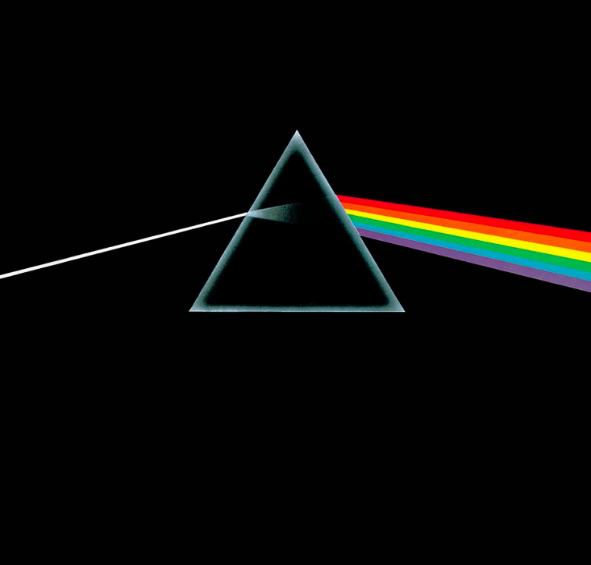
#1. The Dark Side of the Moon ….. Pink Floyd
– This album is everything a great album should be, and more. Innovative. Clever. Energetic. Unique. And then there’s the flawless production and powerhouse instrumentation. Best of all, the album and concept originated from a band that had previously enjoyed only modest success, with little or nothing to suggest they were about to produce and release four astounding albums in six years that would go on to sell a combined 200 millions copies worldwide. The Dark Side of the Moon explores subjects one wouldn’t expect to become so popular with audiences across multiple generations, including human conflict, insatiable greed, time and place, death, and even mental illness. Critics rank this album in most top-25 lists all time, and some have it in the top-10. As for sales, 30 million albums sold to date. It spent 84 weeks on the charts then after a short lapse, it went another 593 weeks (from 1976 to 1988) on the Billboard album charts. As of Jan. 2026, it’s logged 996 weeks in the top-200 which means by this time, that figure could very well be an astronomical ONE THOUSAND WEEKS on the album charts over its 53-year existence. An Unbelievable but True Fact: Despite universal praise and all that time spent on the charts, this album never hit #1.
Listen to “Money” here: CLICK ON
Update: Allow me now to amend my previous (wrong) comment about 1973 being a sub-par year in music. After doing these write-ups and pondering more, this was an outstanding year.