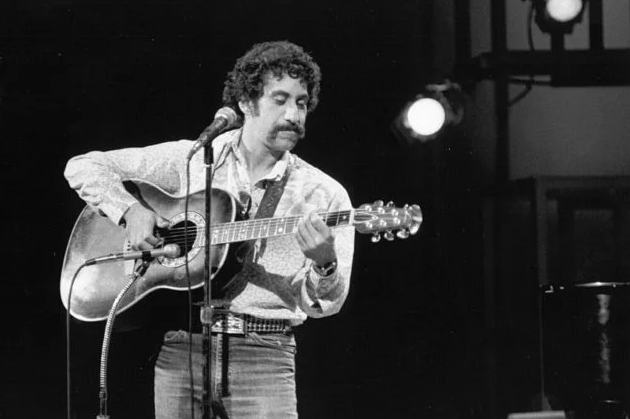

Albums and concerts aren’t merely sounds so much as signposts. Songs and performances mark rites of passage. They are accompanying soundtrack to our lives. Here’s a continuation of my writing series of mostly brief concert reviews, including I remember about various shows, performances, and events over the years. Some reviews will be short, while others will be longer and more detailed. It all depends on what I can remember and what research is available on those old concert dates. I hope you enjoy reliving these experiences with me.
CLASSIC CONCERT REVIEWS: JIM CROCE, SIX FLAGS OVER TEXAS, ARLINGTON, TX, 1973
The year 1973 marked the pinnacle of the singer-songwriter era. Popular music had become dominated by a simpler and scaled-back FM radio-friendly sound stripped to its very core with deeply introspective songs. James Taylor, Gordon Lightfoot, John Denver, Carly Simon, Seals & Crofts, The Carpenters, Helen Reddy, Cat Stevens, and other folksy songwriters pegged as “light rock” reigned atop the pop charts.
However, the “light rock” tagline betrays the notion that a solo singer with only a guitar and a microphone can’t be every bit as dynamic and influential as the loudest amped-up rock band or supergroup. One singer, in particular, at age 30 enjoyed his breakout Summer of ’73. He seemed to be on the verge of becoming much bigger as a voice and a musical force, perhaps even the next Bob Dylan or Johnny Cash — strumming simple chords while delivering elephantine lyrics and symphonic vocals of a newer and wiser generation.
That singer-songwriter was Jim Croce.
_____
Everything about Croce whispered and strummed authenticity. He didn’t look the part of a pop star. He didn’t live the life of a rock star. But nevertheless, he became a bonafide superstar, based entirely on his raw talent and natural charisma, backed up by the gritty foundation of a decade spent performing in tiny venues, writing his own songs, and trying out perfectly-timed chord changes, while remaining unknown and largely ignored by every major record label.
He was a curly-haired Italian-American from Philadelphia with a big nose and bushy mustache. With his worn-out work boots and trademark blue-jean jacket, Croce looked more like a construction worker than the next great American poet. By 1970, still struggling as an aspiring musician, Croce spent much of his time working on construction crews to earn enough money to support his family. He’d even been a tradesman — a welder — during his youth. When he wasn’t working the trade, he was writing about love and playing his guitar. This was a guy we could all easily connect with.
His first album successful album, You Don’t Mess Around with Jim, was released in mid-1972. It spawned a few hit singles. Since Croce was suddenly a hot commodity and needed the money, he signed every deal and accepted every gig that came his way (See: Jim Croce’s Live Concert History).
In the flash of the span of his all-too-brief career success that lasted barely more than a year, Croce was able to connect with audiences of all ages and link musical genres through simple melodies and common emotions that everyone easily understood. “I Got a Name,” “I’ll Have to Say I Love You in a Song,” and “Time in a Bottle” became Croce’s anthems to love. longing, and remembrance.
Croce’s many songs continue to resonate today, 50 years later.

_____
Croce playing at Six Flags Over Texas on the muggy night of August 17, 1973, must have been a scheduling anomaly. As in — what in the hell is a big star like Croce doing playing in an amusement park? [READ MORE HERE]
Nearing summer’s end, Croce’s music had already charted for several months. He was one of the hottest acts in pop music. He’d even released a #1 hit that topped the Billboard chart in July 1973. “Bad, Bad Leroy Brown” was a catchy Boogey-Woogie sing-a-long story about a bar fight. Every kid in my school knew the words to that song.
Indeed, 1973 was the Jm Croce year in music. Opportunities abounded. He appeared frequently on television. His music was heard everywhere. He toured at a blistering pace. Including Europe. When he wasn’t touring, he was writing and recording — three albums of new original material were recorded within that same year.
That year, he played at fairs, farms, festivals, and even under Ferris wheels. Research into his tour dates from this period shows Croce did four consecutive nights of live shows — first, Aug. 15 at Southern Illinois University, Aug. 16 at The Pavilion in Chicago at the Ravinia Folk Festival, Aug. 17 at Six Flags Over Texas Concert Pavilion (2 shows), then Aug. 18 at the Wildwood Convention Hall in Wildwood, NJ. That’s five shows in four nights, with travel in between from St. Louis to Chicago to Dallas to Philadelphia (actually, New Jersey).
Most of us first became aware of Croce and fans of his music during his live appearance on The Midnight Special, a weekly pop music show that aired late every Friday night. This was long before anyone ever dreamed of the Internet, YouTube videos, or MTV. The only way to hear new music was to listen to the radio or go out and buy albums and singles (or 8-track tapes, which were the rave back then). For musicians, an appearance on The Midnight Special was akin to comedians getting booked on the Johnny Carson show. That show launched careers.
Seeing Jim Croce at a giant amusement park shoehorned midway in between Dallas and Fort Worth right off a turnpike in the suburb of Arlington was totally by accident. My father had a custody visit that weekend, and some of the family ended up at Six Flags Over Texas, a theme park known for rides and a carnival atmosphere. Wiped out after a day spent riding roller coasters, we somehow ended up at the Music Mill Amphitheater, a newly-opened 4.500-seat outdoor venue with wooden benches. Croce, who was new but still well-known by this time, played two shows that night, one at 9 pm and the other at 11 pm. Presumably, the late showtimes were scheduled due to the oppressive Texas heat. Or, perhaps it was Croce’s hectic travel schedule. Probably both.

_____
I have three memories from the Jim Croce show.
First, we didn’t pay for tickets. Entry into Six Flags gave all park visitors a complimentary entry to see whatever act was playing that night. Somebody really smart must have booked Croce much earlier that year, long before he became famous. All seating was open and first-come, first-serve. Jim Croce playing a free show? You’ve got to be kidding!
Before confessing memories #2 and #3, remember that I was only 11 at the time.
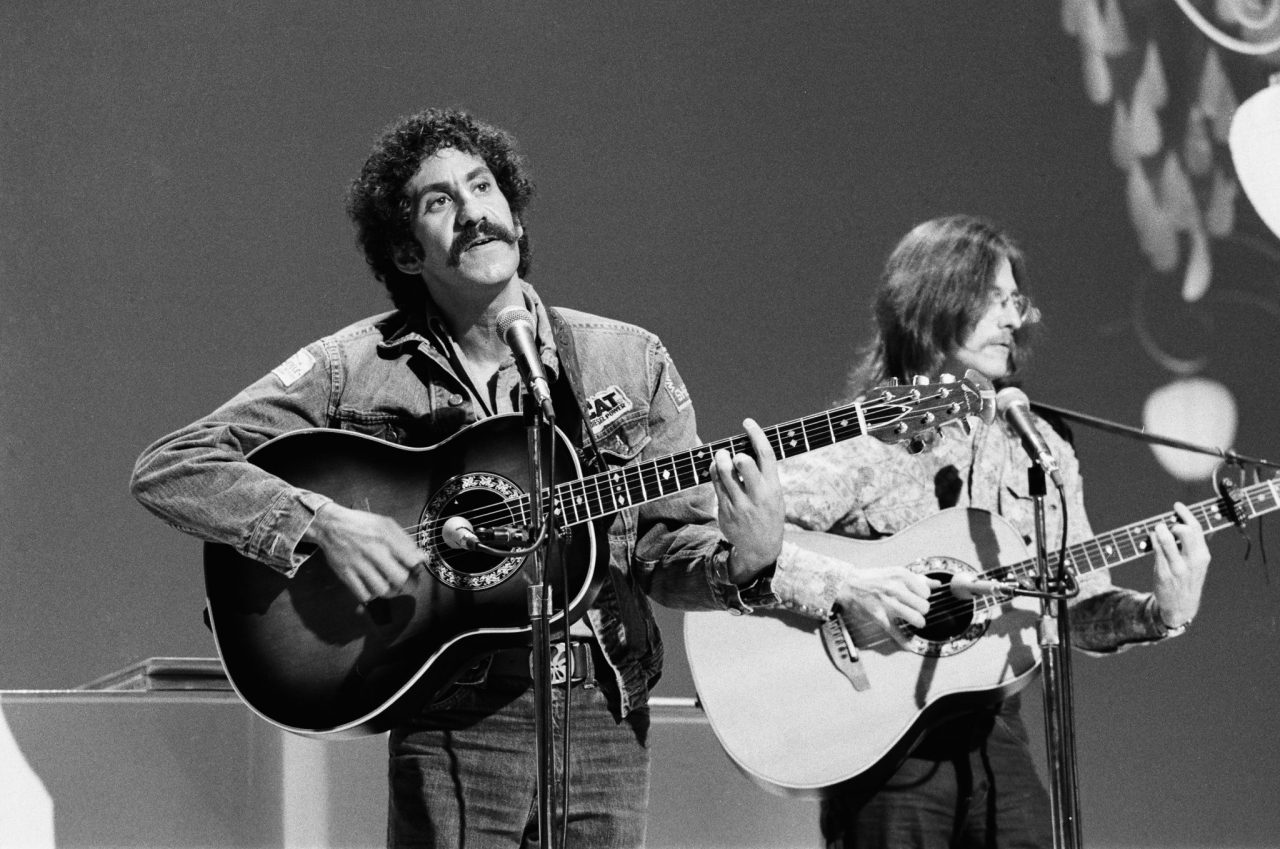
The second memory was being utterly confused as to why there were two performers on stage and why did the secondary guy look like John Lennon? Croce’s fellow guitarist and backup vocalist was Maury Muehleisen. Their fruitful collaboration merits an explanation.
A few years earlier while Croce was still working in construction, he met Muehleisen and learned he was looking for a backup guitarist. Croce got the gig, but then it quickly became apparent to them both that Croce was the superior vocalist and the far more ambitious songwriter with unmistakable commercial potential. So, the two guitarists switched roles, and Muehleisen became Croce’s backup. He’d be Croce’s other musical half in every show, on every song, and album.
Anyway, it seemed odd to see just two guys strumming guitars onstage, with no band. No drummers. No piano. No sound effects. And this leads to an embarrassing confession.
The amusement park audience couldn’t have been a worse crowd for Croce’s style of folksy, cerebral, introspective music. The audience was packed with kids, many tired after a long day in the heat. Brats. I was among them. I was one of the brats.
The third memory was a general feeling of impatience with Croce’s music, typical of an 11-year-old boy, bored with the show. “Play Bad, Bad Leroy Brown!” “Enough with the slow music!” Okay — I didn’t say that, but many of us thought it. There was a rustling in the crowd throughout the show, at least until Croce and Muehleisen finally gave the crowd what they wanted during the short encore.
And with that, we stood up and left, and Croce was headed to the airport on his way to New Jersey.
Of course, if we knew then what we know now, and had we realized this would be one of the final performances of Croce’s life, I’d like to think we’d all would have appreciated that moment a bit more. This is why I respect and revere it now.
_____
Thirty-three days after Croce left Six Flags in Arlington, he boarded a chartered Beechcraft turboprop in Natchitoches, Louisiana the night after yet another performance on that tour. The small airplane never lifted off the ground. It blasted through a chain-link fence at the end of a runway and crashed into a line of tall trees, killing all six passengers on board instantly — including Croce and Muehleisen. An investigation later speculated the pilot (may have) suffered a heart attack during takeoff.
Within days, all of Jim Croce’s music got a bombardment of radio airplay and his vinyl began selling out. Capital/EMI couldn’t put out enough new Croce material, so his extensive back catalog of songs previously recorded but hadn’t been released yet was included on a number of posthumous albums, Photographs & Memories (1974) instantly becoming the best-selling collection among them.
When “Time in a Bottle” was released as a single, Croce’s tragic and untimely death gave its haunting lyrics, dealing with mortality and the desire to have more time, an added resonance. Fittingly it also became his final #1 hit.
It’s impossible to predict what future gifts Jim Croce might have given us had he lived on and continued writing and recording. Just imagine another half-century of treasures. Would he have continued on the soft rock and folky path, or might Croce have evolved into something else? Who knows? We’ll never know.
Instead, we are left with his music and memories — and that’s plenty for which to be thankful.