

I learned something just now, and want to share it. Schindler’s List was released 30 years ago on this day. This demands commentary and remembrance. If ANY movie deserves noting at this time, right now, it’s this one.
My thoughts (off the top of my head):
1. This is the best film ever made. It’s a masterpiece. Schindler’s List is a flawless movie. I don’t think there’s a weak scene in it, or anything that isn’t executed to perfection.
2. Making a film about the Holocaust and all its suffering on such a mass scale was/is fraught with impossible obstacles and insurmountable expectations, the most challenging of which was/is “horror fatigue” (that’s my term). Would audiences really want to pay and sit through 3+ hours of mass orchestrated cruelty?
3. Director Steven Spielberg’s genius was multi-faceted on display and we see him at the absolute pinnacle of any premier filmmaker’s creativity here in this film. Spielberg even intentionally inserted some scenes of comedy, which seems unfathomable in this story about so much death. The “comedy” consists of a scene where Schindler goes to a train station to search for Stern (worth watching here).
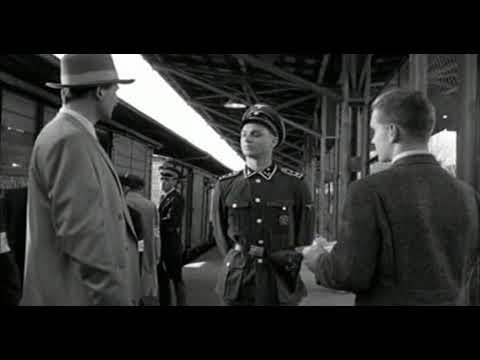
The other scene is where concentration camp inmates are lined up, and the sadistic SS officer asks who stole a chicken (to eat)? The SS officer is met with silence so he shoots an innocent inmate. Then, he goes to a small child and asks, “now tell me—who stole the chicken?” The child points down to the dead body and yells, “him!” What a brilliant heartbreaking clever scene. Maybe the most powerful 2 minutes on film I’ve ever seen (watch here).

4. The performances are stunning. Liam Neeson, a Belfast-born actor, wasn’t well-known at the time. Hard to imagine a better Oskar Schindler. Same goes to Ben Kingsley, cast as Isaac Stern, the SS-noosed concentration camp accountant. But Ralph Fiennes steals every scene he’s in, playing perhaps the most monstrous villain in cinematic history–commandant Amon Goeth. I suspect Fiennes’ failure to win Best Supporting Actor (he lost to Tommy Lee Jones that year) was because so many Academy voters were so appalled by the (real) frightening characterization, they couldn’t fathom voting for the portrayal.
5. Spielberg makes the movie’s conclusion a message of hope and inspiration, which is an astounding achievement given it’s the story of the Holocaust. I’ve never been “pro-Israel,” politically speaking. But the power of the final few moments where the survivors don’t know where to go, and run into local nativist objections (“they don’t want you there….they don’t want you there, either.”) and therefore are compelled to create a safe-haven is flawless execution of a complex historical truth.
6. I’d love to write more, but I’ll leave with these final thoughts: I read (below) that the film was shot in just 72 days. What! Seriously? That’s hard to believe given how perfect every scene in this film comes across. Also, nearly half the movie was done with hand-held cameras? Amazing. Oh, and then there’s John Williams’ magnificent musical score. Has the violin ever cried a more powerful story and message?
Here’s a passage of the post I just read about Schindler’s List at a cinema group on Facebook (LINK HERE):
_________
Influenced by the 1985 documentary film “Shoah,” Steven Spielberg decided not to plan the film with storyboards, and to shoot it like a documentary. Forty percent of the film was shot with handheld cameras, and the modest budget meant the film was shot quickly over seventy-two days. Spielberg felt that this gave the film “a spontaneity, an edge, and it also serves the subject.” He filmed without using Steadicams, elevated shots, or zoom lenses, “everything that for me might be considered a safety net.” This matured Spielberg, who felt that in the past he had always been paying tribute to directors such as Cecil B. DeMille or David Lean.
The decision to shoot the film mainly in black and white contributed to the documentary style of cinematography, which cinematographer Janusz Kamiński compared to German Expressionism and Italian neorealism. Kamiński said that he wanted to give the impression of timelessness to the film, so the audience would “not have a sense of when it was made.” Spielberg decided to use black and white to match the feel of actual documentary footage of the era. Universal chairman Tom Pollock asked him to shoot the film on a color negative, to allow color VHS copies of the film to later be sold, but Spielberg did not want to accidentally “beautify events.”
While the film is shot primarily in black and white, a red coat is used to distinguish a little girl in the scene depicting the liquidation of the Kraków ghetto. Later in the film, Schindler sees her exhumed dead body, recognizable only by the red coat she is still wearing. Spielberg said the scene was intended to symbolize how members of the highest levels of government in the United States knew the Holocaust was occurring, yet did nothing to stop it. “It was as obvious as a little girl wearing a red coat, walking down the street, and yet nothing was done to bomb the German rail lines. Nothing was being done to slow down…the annihilation of European Jewry,” he said. “So that was my message in letting that scene be in color.” Andy Patrizio of IGN notes that the point at which Schindler sees the girl’s dead body is the point at which he changes, no longer seeing “the ash and soot of burning corpses piling up on his car as just an annoyance.” Professor André H. Caron of the Université de Montréal wonders if the red symbolizes “innocence, hope or the red blood of the Jewish people being sacrificed in the horror of the Holocaust.”
The girl was portrayed by Oliwia Dąbrowska, three years old at the time of filming. Spielberg asked Dąbrowska not to watch the film until she was eighteen, but she watched it when she was eleven, and says she was “horrified.” Upon seeing the film again as an adult, she was proud of the role she played. Although it was unintentional, the character is similar to Roma Ligocka, who was known in the Kraków Ghetto for her red coat. Ligocka, unlike her fictional counterpart, survived the Holocaust. After the film was released, she wrote and published her own story, “The Girl in the Red Coat: A Memoir” (2002, in translation).